News
“When I was growing up, enset was always there.”
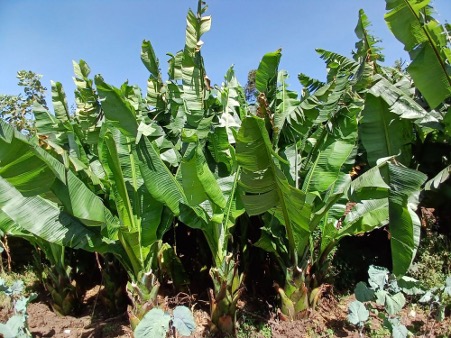
Enset’s adaptability to drought made it stand out in family plots quietly in the fields; thick, green, and patient while other crops struggled. Unlike maize and teff, which demanded much attention, enset stood resilient to its thick stalks, growing steadily and storing food for families in parts of Ethiopia that had once overlooked it’s worth. For many communities, enset means survival.
Yet for decades, the orphan crop that sustains an estimated number of 20 million people in Ethiopia remained invisible in agricultural research, policy discussions, or global debates about climate resilience. It was considered traditional. Local. A relic rather than a resource.
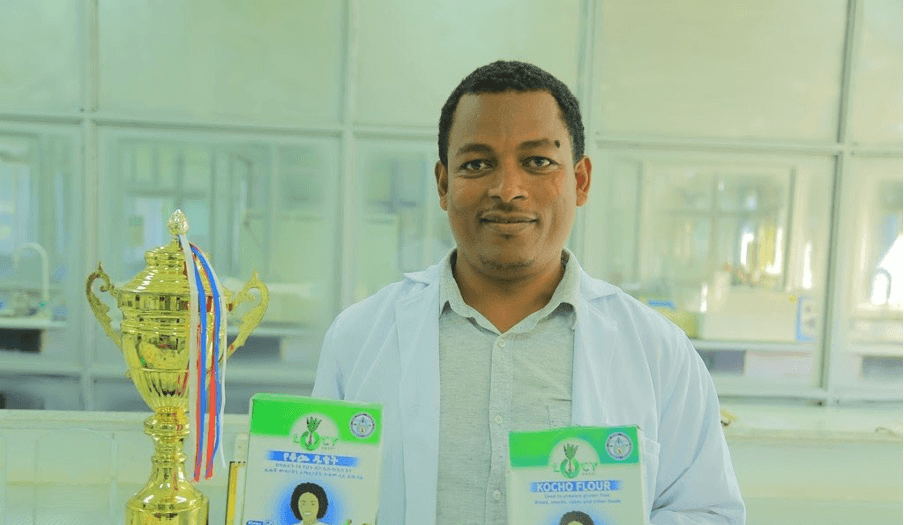
Dr Addisu Fekadu Andeta, now a researcher and laureate of the African Planet Prize, in his quest for understanding why enset sustained communities during drought and food shortages yet it’s potential remained overlooked, spent most of his career asking why and proving that the answer matters far beyond Ethiopia’s borders.
Dr. Addisu explains his work in simple terms.
“I work on transforming enset into more nutritious, market-ready, and environmentally sustainable food products.”
Enset’s resilience is termed as extraordinary by any measure. Often referred to as the “tree against hunger,” it is drought-tolerant, stores carbon in its biomass, and can feed households year-round when seasons turn unpredictable. Unlike annual crops that must be planted and reaped on nature’s schedule, enset awaits; making it a living food reserve during periods of uncertainty.
But Enset's greatest strength and patience in the ever changing climate space has also been its limitation. Traditional processing is laborious, fermentation times are long, and post-harvest losses can reach significant levels. The food it produces, particularly kocho, a fermented starch staple, have remained largely unchanged for generations.
Dr. Addisu saw both the potential and the gap of the crop.
“I grew up watching how enset sustained communities during the drought and food shortages, “he explains. “ But at the same time, I could see how climate change can was making farming more uncertain. The contrast stayed with me. “
His research which focuses on transforming indigenous crops into something more market-ready , and more capable of contributing to climate adaptation across Africa.
The work is deceptively simple in concept, painstaking in practice .
Dr. Addisu’s team is improving traditional enset processing, shortening fermentation times, reducing waste, and blending kocho with nutrient-dense ingredients like soybean and moringa. Early results have been striking: nutritional profiles improve significantly , and consumer testing show strong preference for the enhanced products.
According to Dr. Addisu, he believes that theoretically, he has seen that when traditional foods are healthier, they can be competitive in the market.
Yet for him, the real measure of success is not only in the laboratory.
“What keeps me committed is knowing that improving indigenous crops like enset can address several challenges at once; nutrition, climate resilience, and rural livelihoods,” he says. “Every time I see women processors increasing their income or farmers gaining confidence in climate-resilient production, it reminds me why this work matters.”
In many communities, and specifically where he comes from, women play a central role in processing. Improvements in technology and value addition can therefore translate directly into economic opportunity. A better fermentation method doesn’t just preserve more starch, it puts money in women's hands.
In the late 2025, colleagues encouraged Dr. Addisu to apply for the African Planet Prize, a new initiative by the African Academy of Sciences designed to spotlight continent-led solutions that work within the planet’s ecological limits. The Prize seeks exactly what his research represents: innovations rooted in African knowledge that can address climate change at scale.
When the email arrived announcing that he had won, Dr. Addisu was seated with his coworkers.
“I was silent,” he recalls, smiling. “Then I felt an overwhelming sense of gratitude.” The recognition carried weight beyond personal achievement. “For years, work like ours was often viewed as ‘local’ or ‘traditional.’ Winning the prize confirmed that this knowledge is globally important. It showed that solutions rooted in African communities can contribute to solving planetary challenges.”
For his team, the farmers and processors they work with, the award felt like validation.
“It reminded our partners in the community that their knowledge and their efforts are valued around the world.” Before the Prize, progress moved step by step, one community at a time, one improvement tested, one farmer trained. The funding changed the calculus. Over the next six to twelve months, the prize will allow the team to accelerate work that has moved forward step by step.
Dr Addisu explains his plans to expand improved enset processing systems that shorten fermentation time and reduce post-harvest losses. His team will conduct deeper nutritional profiling and field validation to strengthen the case for policy adoption. They will also support community-based training programs, especially for women and young people, to promote climate-smart food processing and value addition.
“Before, we could only take these steps gradually,” he explains. “Now we can move faster and reach more communities.”
The work is already extending beyond Ethiopia’s borders. Active efforts to build climate resilient food systems across East Africa are underway with works already in Kenya and also working with agricultural universities and cooperatives to identify suitable growing zones and adapt processing methods to local conditions.
The goal is ambitious: a scalable , cross-border enset value chain that strengthens food security while protecting ecosystems. A model, in other words, for how indigenous crops can contribute to development within planetary boundaries.
For Dr. Addisu, Success is measurable in several ways: Better enset based products appearing in local and regional markets. Higher incomes for rural households. Policymakers designating enset climate-smart priority crop, and more quietly, the moment when a woman processor shows a neighbour her improves kocho and explains why it sells faster now.
“Preliminary findings show that blending with soybean and moringa improves nutritional quality and customer appeal, “he notes. “That’s the kind of result that spreads naturally, people see it working.”
Yet Addisu is also clear-eyed about the scale of the challenge.
The prize funding,he emphasizes, is “catalytic but modest. It enables us to initiate key scaling activities and strengthen expansion efforts, including the work in Kenya ,” he says. “but it is not sufficient on its own to achieve Africa-wide impact. Long-term, sustained investment and broader institutional partnerships will be essential.
When asked what would help researchers most to work on climate and sustainability in Africa ,he lists three priorities: Flexible funding, stronger policy integration, and deeper collaboration between scientists, communities, and governments.
“Indigenous African crops are not marginal solutions,” he insists.” They are foundational pillars for achieving climate resilience, food security, and sustainability. But that requires treating them that way, in policy, in investment, in research priorities.”
Since winning, Dr. Addisu has worked to amplify both the Prize and the possibilities it represents. He has highlighted the African Planet Prize during engagements linked to the African Union Summit, at national multi-stakeholder platforms focused on food systems transformation, and in forums organized by Ethiopia's Ministries of Agriculture and Innovation. Social media and institutional platforms have carried the message further.
But he sees room for more. In his suggestions on what would help more, he suggests, "is communications and media support to reach broader audiences. Professional content creation, press coverage, social media amplification. Access to high-level forums where we can showcase these solutions to decision-makers. And institutional backing for workshops and seminars under the Prize banner, that kind of recognition matters." His nominating institution has already amplified the win through official channels and provided access to national stakeholder events. Building on that foundation, he believes, could multiply the impact.
When Dr. Addisu reflects on the future, what gives him hope is not only science.It is people.
"The resilience and ingenuity of African communities inspire me," he says. "Across the continent, people are developing and scaling indigenous climate solutions every day. And now there is growing interest from policymakers, researchers, and funders to support these approaches."
Dr Addisu Fekadu Andeta believes that the future of sustainable food systems in Africa will come not from abandoning indigenous knowledge, but from strengthening it through science, innovation, and policy support.