News
Where I come from, it remains a living threat, a calendar event that refuses to stay predictable.
Some months, everything feels normal then suddenly the wards begin to fill. A few cases become dozens. The same questions return. Where did it start? Which water source? Which community is next? And the hardest one, Why didn’t we see it coming?
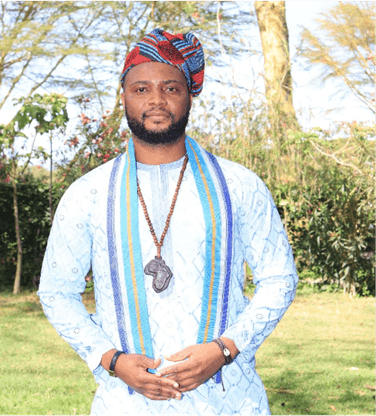
My name is Dr. Yuvi Gildas Hounmanou. I’m a microbial genomics researcher and lecturer at the University of Abomey Calavi (UAC) in Benin. If you want the simplest description of what I do, it’s this. I try to help health systems spot dangerous pathogens earlier especially the ones that climate change is making more unpredictable.
When I say “unpredictable,” I mean that the old patterns don’t hold the way they used to. Rains come differently. Flooding behaves differently. Heat behaves differently. The conditions that allow waterborne diseases to spread can appear then disappear then return in a way that keeps communities and health workers on the back foot.
And in Africa, being “on the back foot” has a very high cost.
I’ve spent a lot of time thinking about this one stubborn reality. People are still getting sick from water. Not because they don’t know better, but because safe options are not always available. Many families live far from reliable services. Many people live in crowded informal settlements. And when water and sanitation are strained, pathogens don’t need an invitation. That’s why this work is close to my heart.
Sometimes I’m asked why I didn’t choose something more “mainstream.” Something trendier. Something that looks better in grant calls. But I always come back to the same answer. We have to return to the basics. We can’t build on weak foundations. We can’t speak about resilience while communities are still battling preventable diarrhoeal diseases.
What frustrates me most is that we often arrive late not because we don’t care, but because our detection systems are slow and centralized.
In many places, the most advanced testing methods sit in a few major centers in big cities. They are expensive. They require specialized skills. They take time to access. That means a clinician in a regional hospital might treat a patient based on symptoms and experience without knowing what the pathogen actually is while an outbreak quietly expands beyond the clinic walls.
So I began asking a different question:
What if the tools could move closer to the people?
That question has shaped everything.
My approach is rooted in microbial genomics the science of reading genetic “fingerprints” of microbes to understand what’s causing disease and how it’s spreading. But genomics alone isn’t enough. It produces huge amounts of data, and in public health, data that arrives too late can be almost as useless as no data at all.
So, I also work with machine learning, because I want systems that don’t just explain what happened, but help us anticipate what might happen next. My dream is a future where we don’t wait for epidemics to prove themselves. We catch the signals earlier and act when the numbers are still small.
I’m doing this work through the African Postdoctoral Training Initiative (APTI) a fellowship implemented by the African Academy of Sciences (AAS), in partnership with the US National Institutes of Health (NIH). My host institute is the National Human Genome Research Institute (NHGRI) at NIH, and I’ve been mentored by Dr. Julie Segre.
I often describe APTI as the bridge I needed.
Before APTI, my path had taken me through the European research system. I earned my PhD in Molecular Microbiology at the University of Copenhagen, and I continued there as a postdoctoral researcher in microbial genomics. It was rigorous, and I learned a lot but the question of “home” never left me.
Returning home is not just a plane ticket. It’s infrastructure. It’s networks. It’s research ecosystems. It’s whether you can keep building without constantly improvising.
APTI gave me something rare. The ability to strengthen my skills in a worldclass environment while keeping my work anchored in African priorities so that when I returned, I wasn’t starting from scratch. I was coming back with tools, partnerships, and a clearer plan.
At NIH, I joined a computational biology group because I needed to do more than collect samples and run tests. I needed to build pipelines the step-by-step systems that take raw genetic data and turn it into useful insight. I learned how to deploy those workflows in a way that can support hospitals and public health teams. I learned predictive modelling approaches, including machine learning and deep learning methods, and how they can be applied to early warning systems.
People sometimes call these “soft skills,” but for me they are survival skills for science that wants to leave the lab and meet real life. And “real life” is the part I can’t stop thinking about.
I keep picturing a clinician with a patient in front of them. A child with severe diarrhoea. A family worried because several neighbours are sick. A nurse who has seen this pattern before and knows what it can become.
Speed matters. Clarity matters.
So back home, my work pushes toward decentralization training hospital laboratory technicians, strengthening local capacity, and making modern detection feasible outside a few centralized sites. The goal is not to chase the fanciest technology. The goal is to shorten the distance between a sample and an answer.
In my pilot work, I’ve been focused on improving turnaround time moving toward a reality where laboratories can screen for pathogens faster, and clinicians can make more informed decisions within a day, not a week.
When you compress the time, you also compress the outbreak.
That’s what people don’t always see. Diagnostics is not only about the individual patient. It’s about the community that patient belongs to. It’s about whether public health teams can recognize a pattern early enough to stop it.
I sometimes think about the next decade, and I imagine a strange kind of silence. Not the silence of neglect but the silence of victory. A time when we stop talking about waterborne infections because they no longer dominate our headlines. A time when “dirty water” is no longer the reason people die. A time when cholera is not a seasonal fear.
And I know that future won’t come from hope alone. It will come from systems strong systems. From training, tools, and trust. From partnerships that don’t just “support Africa,” but invest in African institutions to lead.
That’s why the link to the African Academy of Sciences matters in my story.
AAS, through APTI, is doing something powerful. It is helping African researchers become even stronger while staying rooted in African needs. It’s turning global partnerships into local capacity. It’s helping us build the kind of science that doesn’t end in publication, but continues into policy, practice, and preparedness.
I also carry a long-term aspiration that goes beyond my own work.
I want to contribute to a resilient Africa in the face of climate change and the growing burden of infectious disease through a One Health perspective that recognizes the tight connection between human health, animal health, and environmental health.
And closer to home, I want to help establish my university University of Abomey-Calavi as a leading genomics laboratory for Benin and the region. Not as an island of excellence, but as a hub that supports hospitals, trains scientists, and strengthens public health security.