News
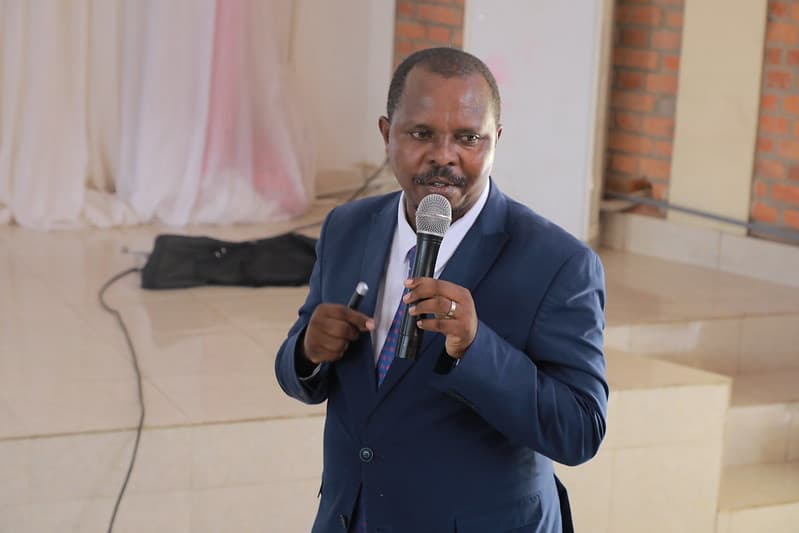
The African Academy of Sciences (AAS), in partnership with the European Union (EU) and the Centre National de la Recherche Scientifique (CNRS), successfully convened the conference on Ensuring Water for All through Scientific Cooperation on 29 April 2026 at the University of Burundi in Bujumbura. The hybrid scientific conference brought together researchers, policymakers, government representatives, and development partners to explore innovative, science-driven solutions for sustainable water management and climate resilience across Africa.
The event formed part of a growing series of strategic engagements designed to strengthen scientific cooperation between African researchers and European institutions through the Africa Research Initiative for Scientific Excellence (ARISE) programme—an AAS flagship initiative implemented in partnership with the African Union and funded by the EU. ARISE supports early- and mid-career African researchers whose work addresses pressing development challenges across the continent.
Opening remarks underscored the urgent need for stronger scientific collaboration to address Africa’s water and sanitation challenges, particularly in the face of climate change, rapid urbanisation, and increasing environmental stress. Speakers emphasized that sustainable water access is not only a development priority but also central to achieving the African Union’s 2026 theme: “Assuring Sustainable Water Availability and Safe Sanitation Systems to Achieve the Goals of Agenda 2063.”
A major highlight of the event was the presentation by Professor Samuel Bunani, an ARISE fellow from the University of Burundi, whose research focuses on developing electrochemical processes for recovering nutrients from liquid waste resources. His work demonstrates how wastewater can be transformed into valuable agricultural inputs, contributing to both environmental protection and circular economy solutions. His presentation sparked significant discussion on the role of local innovation in addressing Africa’s sanitation and water reclamation needs.
From Chad, Dr Abdallah Mahamat Nour, another ARISE fellow, presented his groundbreaking research on the effects of climate change on aquifer recharge. His findings highlighted the growing vulnerability of groundwater systems in arid and semi-arid regions and the need for evidence-based strategies to safeguard water resources for vulnerable communities.
Additional virtual presentations from Professor Sidy Ba and Dr Ngonye Keroletswe further enriched the discussions, showcasing ARISE-supported research on climate resilience, pollution mitigation, and sustainable environmental management. Together, the presentations illustrated the strength of African-led science in generating practical solutions to complex development challenges.
Participants also reflected on the importance of research mobility and institutional partnerships in strengthening scientific excellence. Recent agreements between AAS and leading European institutions, including CNRS and the European Research Council, were highlighted as important pathways for knowledge exchange, co-supervision, and collaborative research that can accelerate scientific impact across continents.
Beyond the scientific presentations, the conference served as a platform for policy dialogue and science diplomacy. Deliberations focused on how research findings can better inform national and regional policy decisions on water governance, climate adaptation, and sanitation systems. Participants agreed that stronger collaboration between scientists and policymakers is essential to ensure that innovation translates into meaningful public impact.
The event concluded with renewed commitment to strengthening equitable North–South and intra-African partnerships, positioning science as a key driver of sustainable development. By showcasing the work of emerging African scientific leaders, the AAS–EU–CNRS partnership continues to demonstrate how collaborative research can deliver solutions that are locally relevant, globally significant, and essential for ensuring water for all in Africa.