News
Nairobi, Kenya, April 2026. The inaugural Africa Semiconductor Investors Forum closed in Nairobi with a clear message, Africa’s semiconductor opportunity is real, but turning it into impact will require coordination, investment, and strong partnerships.
Held under the theme “From the Ground Up: Africa’s Minerals-to-Microchips Moment,” the Forum brought together leaders from government, industry, finance, academia, and development institutions to explore how Africa can move from being primarily a supplier of raw materials to becoming an active player in the global semiconductor value chain.
The discussions were anchored in a hard truth. Africa holds a significant share of the critical minerals needed for semiconductor production yet contributes less than 1% of global semiconductor economic output. The Forum therefore focused not only on potential, but on practical entry points; including chip design, assembly, testing and packaging, mineral beneficiation, skills development, and regional innovation hubs.
For the African Academy of Sciences (AAS), the Forum aligns squarely with its mandate to advance science, technology, and innovation for sustainable development. AAS brings together scientific excellence, policy advisory capacity, programme implementation experience, and continental convening power, assets essential for translating Africa’s scientific potential into industrial and economic value.
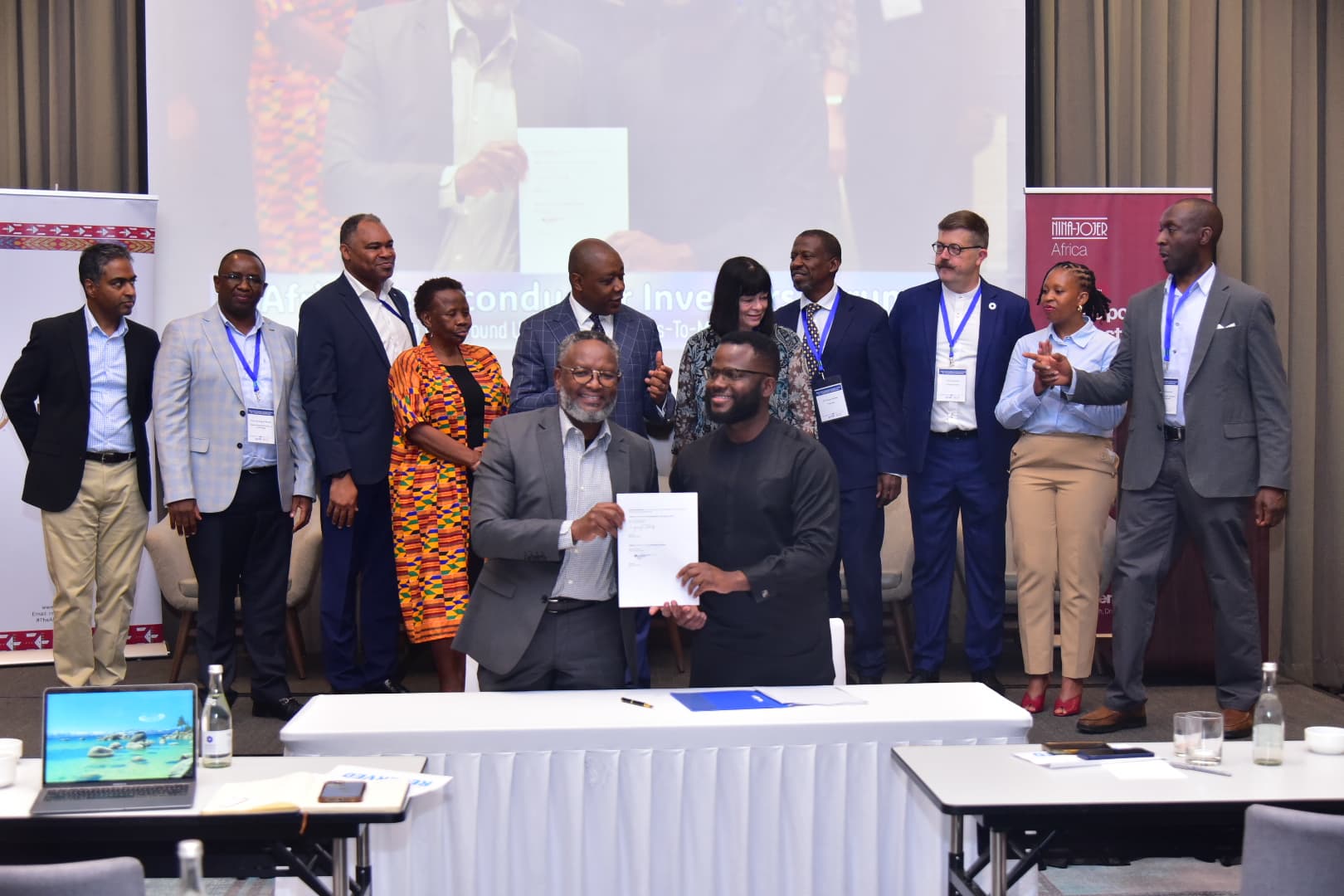
A major outcome of the Forum was a shift from diagnosis to action. Participants discussed the development of a continental semiconductor strategy, stronger regional specialization, long-term financing models, talent pipelines, and the role of African governments as anchor investors, customers, and policy enablers. The Forum also highlighted the importance of practical partnerships, including the STL–ChipMango agreement, which links chip design and manufacturing capability on the continent.
Prof. Nkem Khumbah, Director of STI Policy and Partnerships at AAS, noted that the Forum had created a powerful platform that can transform the industry and the continent.
“We have achieved alignment between science, policy, industry, and investment. But alignment is only the beginning. The real work is in building the structures that will carry this agenda forward financing mechanisms, talent systems, policy frameworks, and partnerships that can endure beyond a single event.”
Continental coordination emerged as a central theme. No single African country can build a full semiconductor ecosystem alone. Progress will require countries to specialize, collaborate, and leverage platforms such as the African Continental Free Trade Area to create scale.
Nardos Bekele-Thomas, Chief Executive Officer of AUDA-NEPAD, emphasized that Africa’s opportunity must be pursued at continental scale. “Africa’s semiconductor ambition must be built on scale. Scale of investment, scale of partnerships, and scale of coordination. This is about moving from extraction to transformation, from raw materials to value addition, and from participation to leadership in the industries that will define the future.”
Semiconductor ecosystems demand patient capital, reliable infrastructure, clean and stable energy, advanced technical skills, clear policy incentives, and strong links between universities and industry. These cannot be built through isolated projects or short-term interventions.
Yet the Forum made it clear that Africa is not starting from zero. Existing assets in Kenya, Nigeria, Egypt, South Africa, Morocco, and other regions provide a foundation for developing hubs in fabrication, design, packaging, testing, research, and talent development.
Africa has the minerals, the market, the talent, and the institutional partners to begin shaping its place in the semiconductor economy. But success will depend on execution.