News
“Did you read the email?” Her nominator's voice was urgent. This was the ultimate moment of recognition for Dr. Debora Kajeguka, a lecturer In Microbiology and Epidemiology at Kilimanjaro Christian Medical University College (KCMC) in Tanzania. For her, the news arrived not in a boardroom or a lab, but rather on a busy Tanzanian roadside. It was one of those slow evenings when her phone rang while she was driving back home from work.
Pulling over to the side of the road, Dr. Kajeguka listened as her colleague read the subject line aloud: "Notification of Award for the African Planet Prize". Overjoyed, she rushed home to read the full message herself, ending her day on a memorable high. The win wasn’t just personal. She explained, "This recognition means a lot to me and my team. We collaborate closely, not in silos. The award tells us to push further in climate-disease studies."
Dr. Kajeguka’s work sits at the critical intersection between public health and a changing environment. Based at KCMC in Tanzania, her research focuses on arboviral disease transmission in Tanzania. It determines how climate change influences the spread of diseases like malaria, dengue, Rift Valley Fever, Crimean Congo Hemorrhagic fever, and chikungunya through changes in temperature, rainfall, and seasonal patterns.
Her passion for this field was sparked by a simple yet persistent observation: in a region where malaria is endemic, many patients with fever didn’t have malaria. Investigating further, she found out that this was because of the persistent exposure to other viruses. This led her to examine the deep connection between our warming planet and disease transmission.
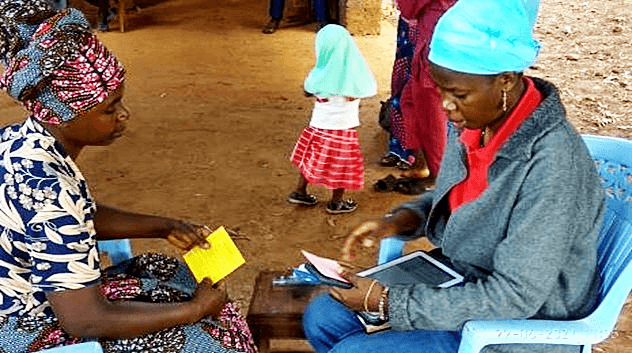
One might wonder what has sustained her dedication to this area of research. She explains it in simple yet powerful terms: “The growing burden of arboviral diseases in Tanzania and across Africa, especially as climate change expands mosquito habitats.” She witnesses the real-world consequences every day and elaborates, “These fevers affect vulnerable communities and are often misdiagnosed as malaria, which leads to poor health outcomes, including antimicrobial resistance from the overuse of antibiotics.” Her work aims to shift this narrative by building local capacity for accurate surveillance, improving diagnostic tools, and developing climate-resilient strategies.
Receiving the African Planet Prize was a catalyst for her research. It facilitated specific steps that were previously out of her reach. The prize will help her finalize critical field data collection for her study on climate change, ethics, and women's health. This was a phase that was pending due to lack of funds. It will also enable her to expand her impact participation as a speaker at a students' scientific conference, where she inspired many to pursue careers in arboviruses and climate change. Additionally, the support will enable her to attend key scientific conferences to share her findings and network with global experts on arboviral diseases.
For Dr Kajeguka, publications weren’t enough to define success; it was the quest to save lives in Tanzanian communities that mattered most. Her research is already having an impact. By holding local feedback and awareness campaigns, her team discovered that many healthcare workers were prescribing antimalarials or antibiotics for climate-sensitive viral diseases like dengue.
"We provided training on proper diagnostic protocols," she explains. This direct intervention prevents misdiagnoses, stops the overuse of prescribed drugs, and ultimately saves patients money and lives. These findings are so vital that results from her related work on uncomplicated malaria treatment in children are being used to inform national health policies.
Moving forward with a very clear roadmap in mind, Dr. Kajeguka is determined to expand her scope. She is currently studying disease transmission through a ‘One Health’ lens, examining the links between human, animal, and environmental health. Her major milestone is to co-develop practical climate change adaptation strategies with local communities and stakeholders. But how will she achieve this ambitious goal?
She affirms that more support is needed. While the Planet Prize is ‘a great seed’, she stresses that sustainable change demands bigger investments, to turn research into action. She calls on the global community to make three key shifts to better support researchers in the planetary boundaries space, particularly in Africa:
Despite the challenges, Dr. Kajeguka draws her inspiration from her team’s dedication and a new equitable partnership with international collaborators. This partnership has been strengthening lab diagnostics in Tanzania, which gives her hope. She affirms, “This collaboration positions us to inform national policies effectively. That unity makes me confident that we can soon end widespread transmission of these viruses."
Dr. Kajeguka is confident that climate action in Africa preserves lives from vector-borne diseases, especially arboviruses, and that warmer weather fuels more mosquito bites and outbreaks. Bearing her research as proof of these hypotheses, she calls upon governments and donors to provide funding for better diagnostics and community engagement.