News
Date: 7 February 2023
The African Academy of Sciences and the UK Academy of Medical Sciences jointly organised a two-day workshop on 6-7 February 2023 to discuss the implementation of One Health approaches in Africa. The One Health workshop was followed by a researcher capacity building workshop on 7 February 2023.
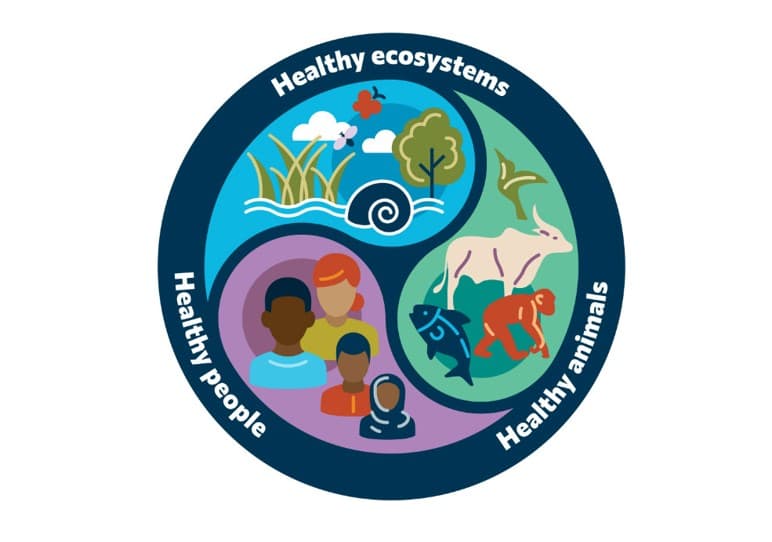
The One Health High-Level Expert Panel defines ‘One Health’ as an integrative and systemic approach to health, grounded on the understanding that human health is closely linked to the healthiness of food, animals, and the environment and the healthy balance of their impact on the ecosystems they share, everywhere in the world.
According to the World Health Organisation (WHO), while health, food, water, energy and the environment are wider topics with sector-specific concerns, a collaborative approach across the sectors contributes to protect health, address challenges relating to food safety, combatting antibiotic resistance; the control of zoonoses; and help preserve the integrity of ecosystems.
Over the past three decades, the onset of outbreaks of zoonotic diseases has increased. As the COVID-19 pandemic has demonstrated, public health systems need to be able to rapidly identify threats and react promptly. From the COVID-19 experience, it is crucial to identify what could be done better, to prevent future outbreaks or mitigate their impacts.
A multi-sectoral One Health approach is critical for the control of diseases such as avian flu and tuberculosis and for the prevention of new emerging pathogens, especially zoonoses, which are diseases that can be transmitted from animals to humans. While emerging zoonoses often capture the world’s attention, given their potential threat to high-income countries, many low-and-middle income countries carry the burden of zoonoses, especially endemic diseases such as rabies and leptospirosis.
The International Health Initiatives set up to address zoonoses predominately focus on those that pose a threat to the broader global community, rather than endemic zoonoses. Even within low resource settings, those predominately exposed to zoonotic infections are vulnerable communities, such as the one billion poor livestock keepers in Asia and Africa.
The One Health approach can play a pivotal part in improving health and more broadly facilitate positive developments to wellbeing, livelihoods, and the environment, by aligning separate efforts to work collaboratively. This involves bringing together key players across the sectors such as medical doctors, veterinarians, agricultural experts, social scientists and public health experts. Bringing together expertise across the ecosystem, could also support with identifying and bridging key research gaps.
The main objectives of this workshop were to:
To achieve this, the workshop aimed to:
Original article published by The Academy of Medical Sciences, linked here.