News
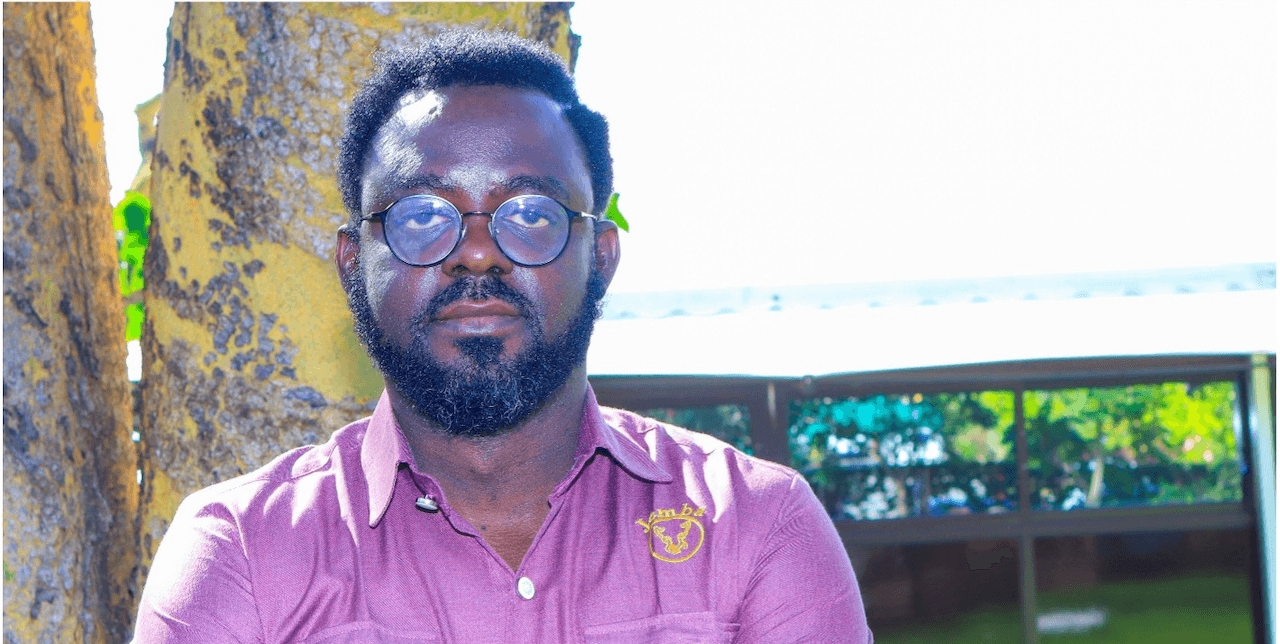
In a region where infectious diseases continue to shape lives and livelihoods, Dr. Alphonsus Chinedu Ugwu is quietly advancing a line of research that could redefine how Africa responds to viral threats. From his base at Redeemer’s University in Ede, Osun State, Nigeria, and through collaborations with leading global institutions, he is working to understand a fundamental question in medicine. How the human immune system determines the outcome of viral infections, and how that knowledge can be harnessed to save lives.
Dr. Ugwu’s work focuses on viral immunology, a field that examines how the body responds to infections such as Lassa fever and SARS-CoV-2. By studying these immune responses in detail, he hopes to contribute to the development of vaccines, therapeutics, and diagnostics, while also strengthening disease surveillance systems and informing public health policy. It is research that sits at the intersection of laboratory science and real-world impact, grounded in the realities of communities where these diseases are most prevalent.
At the Centre of his current work is Lassa fever, a viral hemorrhagic disease that remains endemic in West Africa. Often described as a neglected tropical disease, it is deeply tied to conditions of poverty and limited healthcare access. While the immediate dangers of infection are well known, Dr. Ugwu is turning attention to what happens after survival. Many patients who recover from Lassa fever face long-term complications, the most devastating of which is hearing loss. In some cases, survivors become permanently deaf, while others live with persistent pain and other chronic conditions.
For Dr. Ugwu, these overlooked consequences represent a critical gap in both research and healthcare. He describes them as “the neglected consequences of a neglected disease,” underscoring the urgency of addressing not only survival, but quality of life after infection. His work seeks to return to affected communities, identify individuals living with these complications, and investigate the biological mechanisms that drive them. Understanding why these outcomes occur, he believes it is essential to developing effective interventions.
His research is taking on new momentum through his APTI Fellowship at the National Institute of Allergy and Infectious Diseases in the United States, where he was based at the Vaccine Research Center under the mentorship of leading immunologist Dr. Daniel Douek. In this environment, Dr. Ugwu explored the immunogenicity of Lassa fever vaccine candidates while also working to generate broadly neutralizing monoclonal antibodies that could be used for treatment and prevention.
The experience has been transformative, not only for science, but for the collaborative culture it has fostered. He describes the team as intellectually rigorous yet deeply supportive, a space where knowledge is shared freely and young scientists are encouraged to grow. Within a relatively short period, the team was able to isolate promising monoclonal antibodies from samples collected in Nigeria, raising hope for future therapeutic solutions.
Despite these advances, the challenge remains immense. There are currently no licensed vaccines or specific treatments for Lassa fever, even as the disease continues to affect thousands across West Africa each year. Its classification as both a public health concern and a potential global threat highlights the urgency of sustained investment in research. For Dr. Ugwu, however, the motivation is personal as much as it is scientific. Solving Lassa fever is not only about contributing to global health security; it is about addressing a disease that directly affects his own community.
His long-term vision extends beyond individual discoveries. He is working toward building an immunosurveillance platform that integrates immunological and genomic data to enable faster detection, response, and control of infectious diseases. Such a system would not only improve preparedness for outbreaks, but also position African institutions at the forefront of research and innovation.
Dr. Ugwu’s journey reflects a strong foundation in both African and global scientific training. He holds a Doctor of Veterinary Medicine from the University of Ibadan, a Master’s degree in Integrated Immunology from the University of Oxford, and a PhD in Veterinary Sciences from the University of Cambridge. His work has been supported by a range of prestigious fellowships, including those funded by the Biotechnology and Biological Sciences Research Council, the Cambridge-Africa Alborada programme, and the Bill and Melinda Gates Foundation through the GIISER-ARISE initiative.
Yet, for all its global reach, his work remains firmly rooted in Africa. He speaks with conviction about the responsibility of African scientists to address the continent’s challenges. “Home is home,” he says. “If we do not solve our own problems, no one else will do it for us.”
It is a perspective that reflects both realism and optimism. While acknowledging the challenges facing research on the continent, Dr. Ugwu is encouraged by the growing investment in African science and the strengthening of institutions that support it. Through programmes that provide funding, mentorship, and training in leadership and communication, a new generation of scientists is emerging, equipped not only to conduct research, but to lead it.
As he looks to the future, Dr. Ugwu sees a continent increasingly capable of shaping its own scientific agenda. By integrating immunology with genomics and building systems that respond rapidly to emerging threats, he believes Africa can transform its approach to disease control and prevention.
In the quiet precision of his work, and in the clarity of his vision, there is a sense of momentum. For Dr. Ugwu, the goal is not only to understand disease, but to change its trajectory, ensuring that the next generation inherits a stronger, more resilient health system, built on knowledge generated from within the continent itself.