News
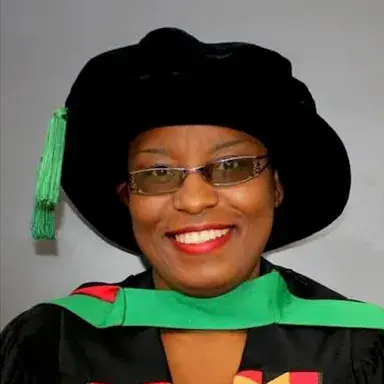
Can you introduce yourself and explain why you focus on gastric cancer in Africa, especially in low-resource settings, and how the ‘African Enigma’ factors into your work?
My name is Dr. Violet Kayamba. I’m a senior lecturer at the University of Zambia, working with the Tropical Gastroenterology and Nutrition group in Lusaka. About a decade ago, I noticed that many of our gastric cancer patients were remarkably young—some were in their 30s or early 40s, even though the disease traditionally affects people over 60. That got me curious. When I found that a quarter of the patients were under 45, I knew there had to be factors unique to our region.
That’s when I encountered this concept called the “African Enigma.” It’s the theory that, despite high rates of Helicobacter pylori (H. pylori) infection, Africa sees low rates of gastric cancer. But my work suggests that this enigma isn’t quite accurate—at least not here in Zambia.
What does your current research project involve, and how does it aim to clarify the prevalence of H. pylori and gastric cancer in Zambia?
My research has three main goals. First, to test whether the “African Enigma” actually holds true by determining national H. pylori prevalence—so far, we’ve found it to be around 79% in Zambia. Second, to develop strategies for detecting gastric cancer at its earliest stages, since late diagnosis is often what leads to poor outcomes. And third, to study the microbiome in the stomachs of Zambian patients, to see if there are bacteria (beyond H. pylori) that might be significant.
Beyond those overarching aims, we’ve already made some important discoveries. For instance, about 15% of Zambian gastric cancers express PD-L1, which could open doors to newer immunotherapies. We’ve also seen that clarithromycin resistance is as high as 28%, suggesting it shouldn’t be used as an empirical drug for H. pylori. Our hope is that these findings will fuel more targeted treatments and interventions.
What key findings or progress have you made so far, and what breakthroughs are you hoping for in the future?
We’re still in the midst of the project, so I hesitate to use the word “breakthrough.” That said, our data already show that gastric cancer isn’t as uncommon here as once believed—and that H. pylori is just as prevalent as anywhere else. We’ve published work on gastric cancer subtypes and biomarkers, such as E-cadherin loss in diffuse-type tumours and the correlation of melatonin with peptic ulcers rather than cancer.
But my real hope is to pioneer a better early-detection system. Right now, patients come in when the disease is advanced, which drastically reduces survival rates. We’ve tested a novel tool called the Sangui-filum (S-filum), designed for low-resource settings, although it didn’t meet the sensitivity needed for a diagnostic test. Still, we learned a great deal from that attempt, and we plan to keep innovating.
How has the ARISE programme supported your work, including any novel diagnostic tools you’ve tested?
ARISE has been instrumental. They provided grants that allowed me to hire students and lab scientists, buy essential reagents, and even acquire a gastroscope, which is critical for examining patients’ stomachs. As I mentioned, ARISE funding also supported research on the Sangui-filum, which—while it didn’t become our silver bullet—gave us valuable data. And I believe it’s the first of many such innovations we’ll keep testing.
How do you approach mentorship in your research, and why do you consider training the next generation of African scientists so important?
Mentorship is really close to my heart. I’m currently supervising several master’s and PhD students, some funded by ARISE and others through different grants I’ve been part of. It’s powerful to watch young researchers grow in skill and confidence. One of my biggest goals is to cultivate a cohort of African scientists who can carry the torch—publishing high-quality studies, influencing policy, and ultimately changing the health landscape here on the continent.
What has been the most rewarding aspect of your work, and how have you balanced this demanding career with your personal life?
It’s incredibly rewarding to see my mentees becoming capable researchers and to realize that our work is starting to gain international recognition. I’ve travelled to the USA, UK, Senegal, Nepal, South Africa, Japan, and the Philippines to present our findings—sometimes thanks to ARISE, sometimes through other sponsors. Everywhere I go, I meet scientists who are eager to learn from our data in Zambia.
Balancing work and home life can be challenging. I have two young sons, and I can’t always give them as much time as I’d like. Research demands long hours—late nights in the lab or analysing data—and it can feel like a juggling act. But I believe that what I’m doing now will create a better future, not just for them but for many families across Africa. That belief keeps me going.
Finally, what is your vision for the future of gastric cancer research in Africa, and how might your findings contribute globally?
Dr. Kayamba: My vision is twofold: first, to ensure that in the near future, we can diagnose and treat gastric cancer early in Africa—improving outcomes and saving lives. Second, to establish that African researchers can lead and collaborate on groundbreaking science that benefits the entire world. The unique attributes of stomach cancer we see here are important for everyone to understand.
I want to put Africa on the global map as a leader in gastric cancer research, not just a bystander. We have critical data, promising talent, and urgent need; that’s a potent combination for meaningful breakthroughs. And with support from programs like ARISE, I’m confident we’ll get there.
About the Interviewee
Dr. Violet Kayamba is a senior lecturer at the University of Zambia School of Medicine and a researcher with the Tropical Gastroenterology and Nutrition Group (TROPGAN). She earned her PhD in 2019 and has since focused on understanding the epidemiology and mechanisms of gastric carcinogenesis in Zambia. Through her work, she hopes to pioneer cost-effective diagnostic methods, shape local and global policies, and mentor the next generation of African scientists.