News
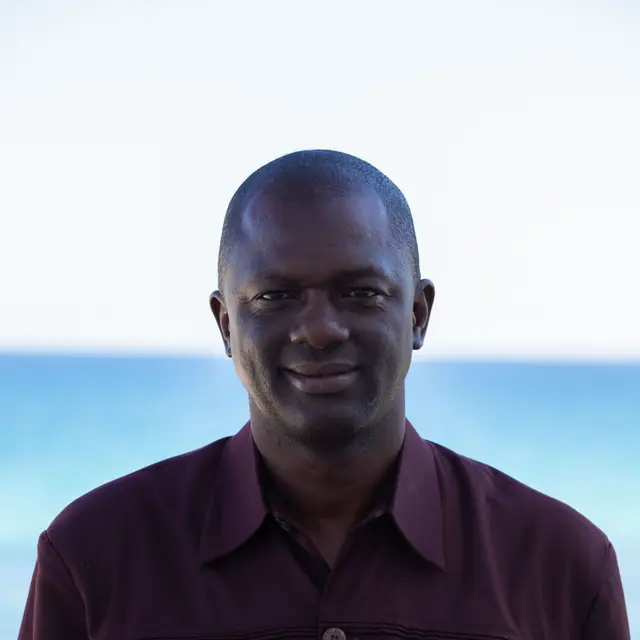
A Conversation with ARISE Grantee, Dr. Ahmed Amara Konaté
“I’ve walked through countless mining sites in West Africa,” says Dr. Ahmed Amara Konaté, “and each time, I meet people risking their lives to earn a living. It’s an ancient practice—digging for gold in the soil—but it’s also a critical source of income for millions. I want to make it safer.”
Dr. Konaté is an Associate Professor, ARISE grantee, and Director of Research at the Higher Institute of Mines and Geology of Boké in Guinea. His mission is to develop practical, science-backed solutions for artisanal gold miners—people who often work in hazardous conditions with little formal support. He’s devoted his life to studying the environmental impacts of these mines and finding better ways to protect both the workers and the land they rely on.
A Lifelong Passion for Geophysics and Community
“I grew up understanding how important mining is here,” he explains. “Gold is woven into our history, our economies, and our families’ livelihoods. But artisanal gold mining, done on a small scale, can cause serious problems if we ignore safety measures and dump toxic chemicals into the environment.”
Dr. Konaté’s background in Applied Geophysics gives him the tools to investigate how mining affects water supplies, soil conditions, and the stability of mine shafts and tunnels. “With geophysics understanding,” he says, “I can ‘see’ beneath the earth’s surface. This helps me pinpoint where water might be contaminated or where a tunnel could collapse.”
Understanding Artisanal Gold Mining’s Challenges
West Africa holds up to 10,000 tons of gold reserves, making it a hotspot for artisanal and small-scale gold mining (ASGM). While it provides jobs and reduces poverty, it often unfolds without sufficient oversight. Many miners aren’t legally registered, which leaves them vulnerable to accidents and health risks.
“The biggest challenge is that most miners lack formal training. They’ll dig dangerously deep shafts without proper support, or they’ll use toxic chemicals like mercury or cyanide without safeguards. We see water contamination, deforestation, and even the collapse of entire mine tunnels.” He observes.
A Project for Safer, Greener Mining
Dr. Konaté’s current project focuses on improving artisanal gold mining processes in Guinea and Mali. By measuring the impact on soil, water, and local ecosystems, he and his team aim to propose safer, more sustainable techniques tailored to local realities.
“We’ll start with a thorough assessment,” he says. “We’ll gather data on the chemical composition of water and soil, monitor mining sites with satellite imagery, and document current mining practices. Then we’ll develop training modules on how to mine in a way that’s both efficient and less harmful to the environment.”
Satellite Imagery: A Bird’s-Eye View of Change
“Satellite imagery is a powerful tool,” Dr. Konaté explains. “From above, we can see how mining sites spread over time, and how they affect rivers, vegetation, and entire landscapes. We will use these images and data from pilot studies to create a sustainable, practical model for artisanal gold mining.
This model will consider everything from the right way to stabilize underground galleries to identifying plant species that can naturally absorb pollutants (a process called phytoremediation). “If we can clean up contaminated soil and water,” he adds, “we can protect miners and the communities living around these sites.”
Bridging Policy, Practice, and Community
For Dr. Konaté, research is only as good as its practical impact. “We’re not just collecting data to publish,” he says. “We want to bring together miners, government officials, and local communities. We want them to see what the science tells us about water contamination, the dangers of tunnel collapses, and how we can fix these issues.”
By involving policymakers directly—through roundtable discussions, workshops, and awareness campaigns—Dr. Konaté hopes to promote new regulations that are informed by science and shaped by local realities. “Miners need legal frameworks that protect them,” he says. “And governments need to recognize artisanal mining as a legitimate economic activity that supports families. If we work together, we can make it safer.”
Training the Next Generation
One of Dr. Konaté’s proudest achievements is his role as a teacher and mentor. “Through the ARISE funding, we’ve recruited four PhD students and six master’s students from Guinea, including two women from Mali,” he shares. “They’re the future of mining research in this region.”
Recognition and the Road Ahead
Dr. Konaté’s efforts haven’t gone unnoticed. In 2023, he won second prize for best researcher in Guinea, was promoted to Associate Professor, and appointed Deputy Director General in charge of research at his institute.
But for him, the biggest reward is seeing his work make a difference in people’s lives. “When I visit a mining site and see that fewer people are getting hurt, or the water is cleaner—that’s the real prize.”
He envisions a future in which artisanal gold mining, “still a vital livelihood for millions,” is carried out legally, safely, and with respect for the environment. “We don’t want to shut down a practice that feeds so many families,” he clarifies. “We want to help it evolve. We want miners to have permits, training, and the knowledge they need to work without harming themselves or the land.”
For Dr. Ahmed Amara Konaté, sustainable artisanal gold mining is more than an academic pursuit—it’s a chance to uplift entire communities. By bridging science, policy, and on-the-ground practice, his research offers a path toward safer operations, healthier environments, and thriving local economies.
“I believe in the potential of West Africa,” he says, smiling. “Gold is part of our heritage, but so is resilience and innovation. If we do this right—if we bring everyone to the table, share knowledge, and commit to positive change—we can turn artisanal mining into a genuine force for good.”
Detailed Q and A
Sustainable Artisanal Gold Mining in West Africa: Bridging Science, Policy, and Practice
A conversation with Dr. Ahmed Amara Konate
Can you briefly introduce yourself and explain what inspired you to focus on artisanal gold mining (AGM) and its environmental and societal challenges in Africa?
I am Ahmed Amara Konaté, Associate Professor, ARISE fellow, and Director of Research at the Higher Institute of Mines and Geology of Boké, Guinea. My current research focuses on developing new solutions to the environmental and social challenges posed by mining in West Africa.
West Africa is a major global gold province, holding reserves of up to 10,000 tons. Artisanal and Small-Scale Gold Mining (ASGM) is a significant economic activity in developing West African countries. However, this rapidly expanding industry raises concerns due to the methods and chemicals employed. ASGM's exploitation practices have profound impacts on society, the economy, and the environment, necessitating the implementation of appropriate measures and techniques for sustainable operation. Furthermore, there is a significant lack of quantitative data regarding the environmental impact of ASGM.
What are the main objectives of your current project on improving artisanal gold mining processes, and how do you aim to address the environmental impact of these activities?
This project aims to provide artisanal miners with the essential practical knowledge for improved mining practices. This will be achieved by establishing a current state assessment of mining practices in select sites in Guinea and Mali; analysing the impacts of artisanal and small-scale gold mining (ASGM) and processing on soil and water resources; determining the physical, chemical, and geotechnical properties of rocks, soils, plant species, and water resources; proposing improved mining and processing methods adapted to West Africa; and developing innovative, multidisciplinary training modules on sustainable and safe exploitation techniques. Through a multidisciplinary approach encompassing mining, hydrogeology, geophysics, and geotechnics, this project seeks to objectively characterize the impacts of ASGM, track their evolution, and ultimately improve current mining techniques.
How will your research provide practical solutions for artisanal miners to improve techniques and reduce toxic chemical use?:
Our research will analyse current artisanal mining extraction and processing techniques in Guinea and Mali, along with their environmental impacts. Based on these findings, we will propose improved, locally adapted methods. We will then disseminate these findings to artisanal miners and decision-makers through training, workshops, and round table discussions, ensuring collaboration among stakeholders.
How will satellite imagery and pilot studies inform a model for safer, more sustainable artisanal gold mining?
Satellite imagery will be used to monitor mining activities, providing spatial insights into gold panning sites, watercourse dynamics, land use, vegetation cover, water resource vulnerability, erosion, and basin modeling. Pilot studies will document current artisanal gold mining and processing methods. These combined findings will inform a model for safer, more environmentally sustainable artisanal gold mining.
What do you see as the biggest challenge artisanal gold miners face, and how can your research contribute to overcoming these challenges?
Health and environmental issues associated with artisanal gold mining (AGM) pose significant human rights challenges. Many artisanal miners operate without formal mining permits or legal frameworks, relying instead on longstanding customary rules. Through this project, we aim to provide policymakers with the data and insights needed to raise awareness among artisanal miners and stakeholders, and to promote safer, more environmentally responsible mining practices.
How has your background in applied geophysics shaped your approach to resolving the environmental and societal issues related to mining activities?
Artisanal gold mining has been an established practice in West Africa for centuries. While it significantly contributes to local development, it also has grave consequences for both the environment and the well-being of miners. My background in Applied Geophysics equips me to examine the Earth’s subsurface structures and composition. This expertise is crucial for identifying potential water contamination and understanding the causes of mining accidents, particularly the collapse of underground galleries—a recurring tragedy that results in loss of life and severe hardship for families in gold mining regions of Africa.
What are some of the innovative methodologies you are developing in this project, and how do you envision these being applied across other mining regions in West Africa?
We use remote sensing and GIS to monitor mining activities, providing actionable spatial data for better land-use decision-making. We identify plant species with phytoremediation potential to absorb contaminants, helping limit the spread of pollutants in soil and groundwater. We develop wastewater treatment methods to manage gold mining by-products before their release into the environment. We also train artisanal miners in safe techniques for excavating shafts and galleries, including the proper stabilization of pillars to prevent mine collapses. These methodologies can be adapted across West Africa through collaboration with local researchers and the establishment of partnerships with universities throughout the region.
In what ways do you hope to bridge the gap between research, artisanal miners, and public authorities to promote safer and more environmentally friendly mining practices?
This project serves as a platform for dialogue and knowledge transfer among researchers, artisanal miners, and public authorities. It will strengthen the capacity of researchers, inform policy through scientific evidence, and involve key stakeholders in roundtable discussions, workshops, and training sessions. By bringing all parties together, we foster mutual understanding and support for safer mining operations.
How does your work align with promoting sustainable development in West Africa, and what impact do you hope to have on both the mining sector and local communities?
In Guinea, as well as in ECOWAS and the African Union member states, the mining sector is a key government focus. These governments aim to develop mining activities at local, national, and regional levels. Our project specifically addresses the sustainable development of artisanal gold mining, seeking to reduce environmental impacts. By inviting stakeholders to events such as roundtables, workshops, and training sessions, we support the creation of policies and practices that balance economic growth with environmental stewardship.
What has been the most rewarding aspect of your work as a researcher and lecturer in the field of mining and geology?
How do you see your research contributing to the long-term economic and environmental transformation of artisanal mining in West Africa?
Our work will shed light on the environmental impacts of artisanal gold mining and guide its transformation into a more socially and environmentally responsible industry. By updating the database of active and abandoned mines, we provide valuable resources for both the mining sector and government authorities to better regulate AGM. This improved oversight can enhance the quality of life for miners and surrounding communities while protecting the environment.
Looking ahead, what are your aspirations for the future of artisanal gold mining in Africa, and how do you envision your research playing a role in this transformation?
Answer:
Artisanal gold mining, often considered an ancestral activity, has expanded in recent decades as a critical livelihood for millions of people in West Africa, helping reduce poverty and curtail rural exodus. Rather than eliminating this practice, we should encourage legal, regulated gold mining that complies with established mining codes. Public authorities, artisanal miners, and local communities must collaborate on training and awareness campaigns—through workshops, seminars, posters, and public outreach—to foster safer and more environmentally conscious mining operations. Our research aims to underpin these efforts by offering scientific insights, data, and practical recommendations that shape more sustainable practices across the continent.