News
For many families across Rwanda, the initial signs that a child is not reaching expected developmental milestones such as delay in walking or talking raise uncertain questions. Why is their child experiencing developmental delays? What caused the condition? And most importantly, what can be done? Limited access and low awareness of genetic testing and the scarcity of African-specific research on neurodevelopmental disorders have often made accurate diagnosis and appropriate care difficult (or inadequate).
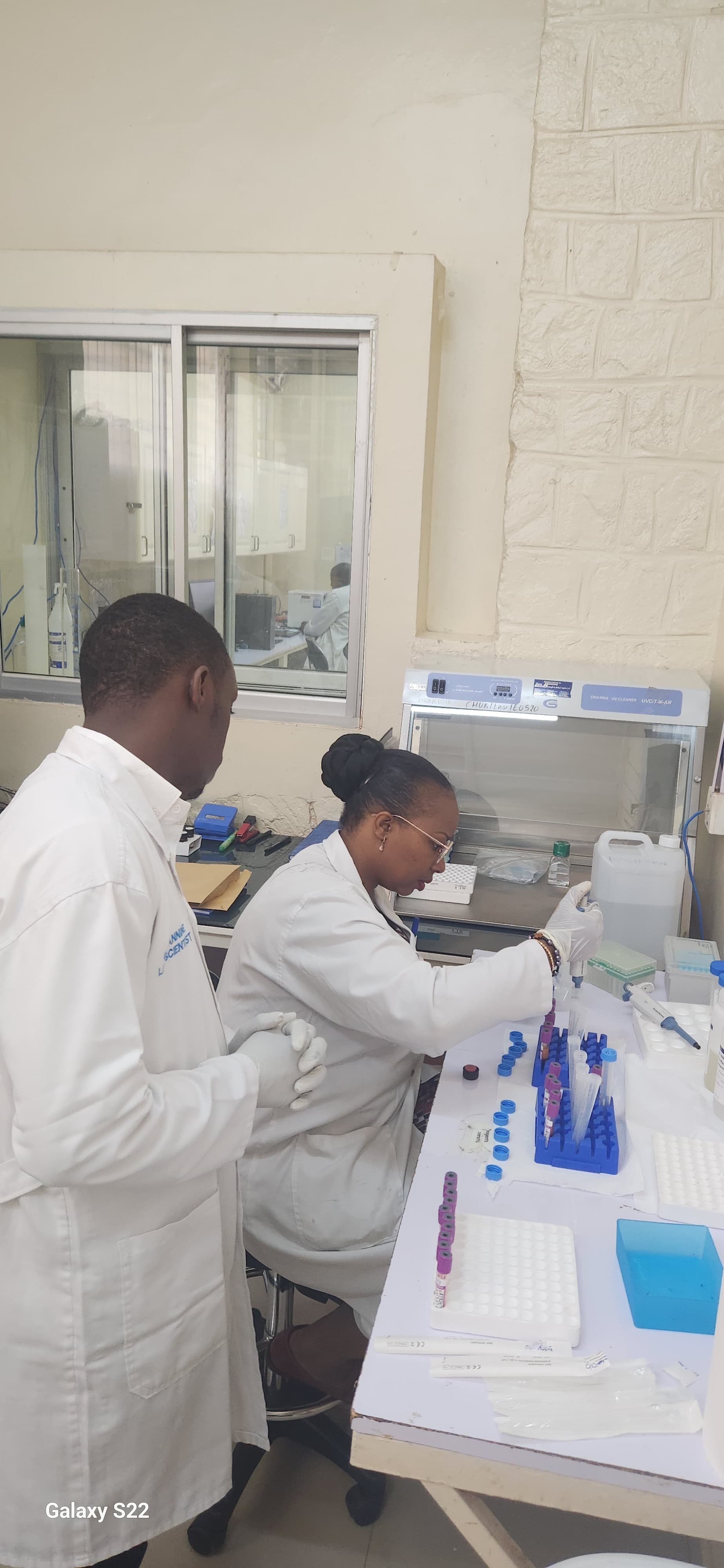
Dr Annette Uwineza, a Fellow of the African Research Initiative for Scientific Excellence (ARISE), Associate Professor in Human Genetics at the University of Rwanda, and clinical geneticist, has dedicated her career to understanding the genetic causes of neurodevelopmental disorders in children. Her clinical experience with families seeking explanations for developmental delays, intellectual disabilities, and congenital malformations inspired her to investigate the genetic and environmental factors contributing to these conditions.
Her determination has grown into the Genomic and Environmental Factors of Neurodevelopmental Disorders in Rwandan Children (GENNEURWA) project. This ambitious study is advancing the understanding of neurodevelopmental disorders in Rwanda while helping build the country’s capacity for genomic research.
Understanding disorders that remain largely unexplored
In Africa, where genetic research has historically been limited, causes of neurodevelopmental disorders (NDDs) remain poorly understood and explored. Many families therefore have little to no access to definitive diagnoses or the specialised care that often follows an accurate understanding of a child’s condition and helping in the prevention of some conditions in the future siblings.
Through the GENNEURWA project, Dr Uwineza and her team are investigating the genetic changes and environmental factors associated with three neurodevelopmental conditions affecting Rwandan children: intellectual disability and global developmental delay, autism spectrum disorders, and microcephaly.
The projects’ unique approach includes comprehensively combining genomic analysis with the study of environmental influences that may contribute to these disorders. By identifying risk factors that are specific to Rwanda, the research aims to support earlier diagnosis, improve clinical management, and inform healthcare strategies that respond to local realities.
Exploring genomic technologies to improve diagnosis
At the centre of the project, is the application of Whole Exome Sequencing (WES), an advanced genomic technique that examines the protein-coding regions of the human genome, where many disease-causing mutations occur.
Applying this approach, the research team seeks to identify rare or previously unknown genetic variations linked to neurodevelopmental disorders among Rwandan children. These discoveries provide crucial insights that deepen understanding into the genetic variations that contribute to conditions like intellectual disability, autism spectrum disorder and microcephaly.
Beyond identifying the cause of a condition, a genetic diagnosis can guide appropriate care, support long-term planning, and provide valuable information through genetic counselling for future pregnancies.
Understanding the role of environmental factors
While genetics lay the foundation of the research, the GENNEURWA project also recognizes that environmental factors play a crucial role in child development.
The study explores environmental influences including maternal nutrition, infections during pregnancy, and early-life exposure to toxins or infections. Understanding how these factors interact with genetic predisposition will enable researchers to develop a more complete picture of neurodevelopmental disorders within the Rwandan context.
This integrated approach also supports the development of practical tools tailored to local healthcare systems.
Equally important is the project’s commitment to strengthening local capacity. By training healthcare professionals to use these tools effectively, the initiative seeks to enhance the ability of Rwanda’s health system to identify and manage neurodevelopmental disorders more effectively.
Generating evidence for stronger healthcare systems
The insights generated from the project also have the potential of strengthening public health policies in Rwanda.
Evidence generated through the project could reinforce the importance of quality prenatal care, maternal health, and early identification of neurodevelopmental disorders. Identifying specific risk factors would enable targeted public health interventions while supporting the integration of genetic screening into routine healthcare services, ultimately improving early diagnosis and intervention.
Expanding Africa’s contribution to genomic research
African populations remain underrepresented in global genetic studies, particularly in research on neurodevelopmental disorders. The GENNEURWA project addresses this gap by generating region-specific evidence that reflects the genetic diversity and environmental realities of African populations.
The findings will not only improve understanding of neurodevelopmental disorders within Rwanda but will also contribute valuable knowledge to the global scientific community. At the same time, the project is helping establish stronger genetic testing infrastructure and expertise within the country, laying the groundwork for more accessible genetic services in the future.
Dr Uwineza hopes that this work will encourage greater collaboration among African researchers and contribute to stronger diagnostic capabilities across the continent.
Investing in the next generation of African scientists
Dr Uwineza credits her scientific discovery as part of a great milestone.
The ARISE Fellowship has been instrumental in advancing her research. It has provided the resources and mentorship needed while also creating opportunities to mentor emerging African scientists. By involving young researchers throughout every stage of the project, from genetic analysis and clinical diagnostics to research methodology, she is helping build the next generation of experts who will continue advancing genomic research across Africa.
A future shaped by precision medicine
Dr Uwineza envisions a future that potentially transforms the understanding and treatment of neurodevelopmental disorders across Rwanda and the wider African continent.
By identifying the specific genetic causes of these conditions, researchers can move towards more precise treatments and targeted interventions. Equally important, the project has the potential to reshape public understanding of neurodevelopmental disorders, fostering more supportive environments for affected children and their families while improving long-term health outcomes.
Through the GENNEURWA project, Dr Uwineza is not only expanding scientific knowledge but also helping build a future in which children living with neurodevelopmental disorders receive earlier diagnoses, more informed care and greater opportunities to thrive. In doing so, the project demonstrates how African-led genomic research can address local health priorities while contributing meaningful evidence to global science.
Dr Annette Uwineza is a fellow of the African Research Initiative for Scientific Excellence (ARISE) programme and an Associate Professor in Human Genetics at the University of Rwanda. She is a medical doctor with a doctorate in Medical Sciences (Human Genetics) form the University of Liege.
ARISE is a research and innovation (R&I) support programme of the African Academy of Sciences (AAS), implemented by the AAS in partnership with the African Union (AU) and the European Union (EU). Founded on the AU-EU High-Level Policy Dialogue on Science, Technology, and Innovation, ARISE provides a vibrant platform and pathway for R&I exchanges in contribution to sustainable and inclusive development, economic growth, and job creation.