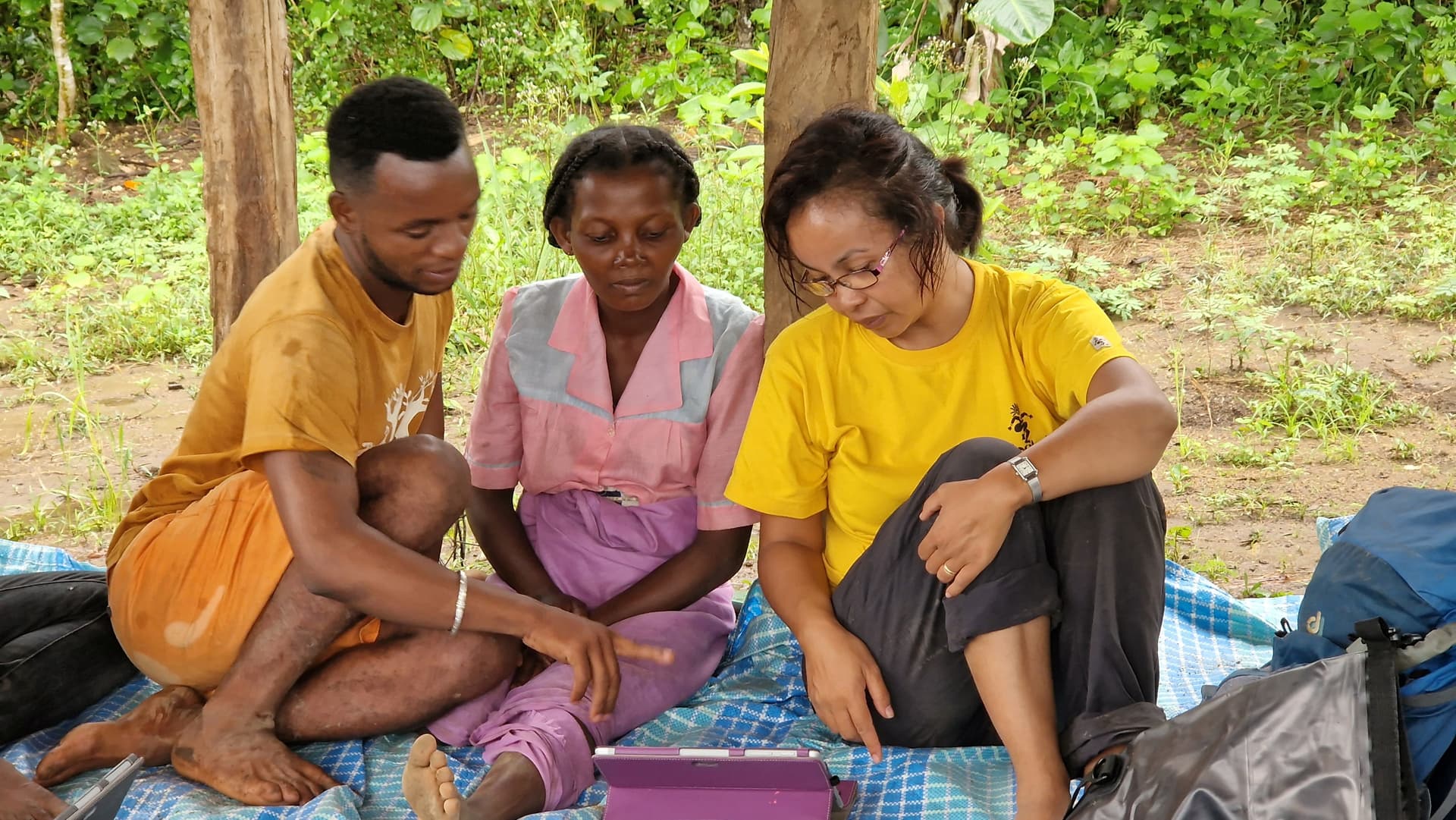
Across Africa, farmers are facing the growing challenges of climate change, land degradation, biodiversity loss, and food insecurity. Finding solutions that can simultaneously improve livelihoods, protect ecosystems, and strengthen resilience is becoming increasingly urgent. For Dr Sarobidy Rakotonarivo, an environmental socio-economist and ARISE grantee, addressing these interconnected challenges is at the heart of her research.
Dr Rakotonarivo studies the factors that make nature-based climate solutions more effective in Africa. Her work focuses on interventions such as forest conservation, ecosystem restoration, and climate-smart agriculture (CSA), with the goal of understanding how these approaches can deliver lasting benefits for both people and the environment.
This search for practical, evidence-based solutions has led Dr Rakotonarivo to pursue interdisciplinary research that combines environmental science, economics, and social policy. Her work seeks to identify interventions that can support rural communities while contributing to the conservation of unique ecosystems.
Madagascar provides a compelling context for this research. The island is recognised globally for its extraordinary biodiversity, with thousands of plant and animal species found nowhere else on Earth. Yet this natural heritage is increasingly under threat. Forests continue to be cleared for agriculture, resulting in significant biodiversity loss and environmental degradation.
At the same time, agriculture remains the main source of income for around 80% of Madagascar’s population. Many smallholder farmers rely on traditional slash-and-burn, or swidden, agriculture to access fertile soils. While these practices provide short-term benefits, they often lead to declining soil fertility, low agricultural productivity, increased food insecurity, and greater vulnerability to climate change.
Against this backdrop, climate-smart agriculture has emerged as a promising pathway towards more sustainable and resilient farming systems.