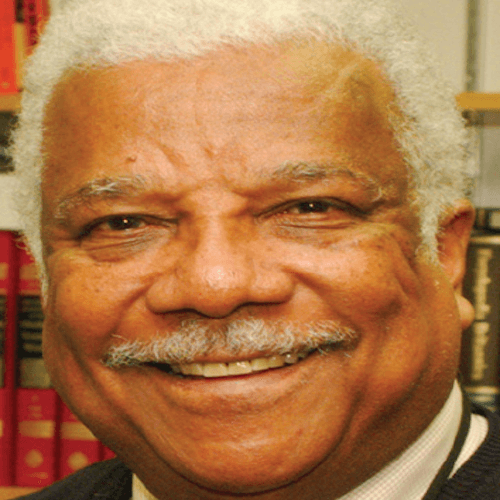
Political science intellectual who courted controversy “My life is one long debate.” African scholar Prof Ali Mazrui’s life and work confirmed this description. From the contentious 1986 nine-part documentary produced by the BBC, The Africans: A Triple Heritage on the impact of indigenous culture, Islam and Christianity to his criticism of African socialism as a western import to undermine Africa’s development that made him to be viewed as neo-colonialist. The Kenya-born scholar, who was described as passionate, eloquent and charismatic, was both revered and criticised for his work. His critics, however, couldn’t deny the influence Prof Mazrui had on African politics, international political culture, political Islam and globalisation. His writing still resonates with current scholars and some has proven to be prophetic. For example, one of his 47 books, Islam: Between Globalisation and Counter Terrorism, which explains how terrorism was ensnaring religion, gives insight into the current global concern on terrorism. He spoke of the value of Africa’s complex and multi-layered identity and culture, inspiring Africans to confront their identity and unsettling some western scholars. Lynne Cheney, Chair of the National Endowment for the Humanities, which funded his 1986 documentary dismissed it as an “antiwestern diatribe” that blamed “all the moral, economic and technological problems of Africa on the west”. His courage in challenging authority at a time that the euphoria of independence saw most Africans hero worshipping their liberators or heroes proved that democracy is built on accommodating divergent views and voices. In the 1970’s he fled Uganda after publicly criticising its then President Idi Amin who had invited him to be his chief adviser on international affairs. Unfortunately this lost him opportunities to work in Kenya. Indeed his views on the need to recognise national heroes, without worshipping them embodied his work as did his other philosophies: Africa’s triple heritage, where he argued that modern Africa could be described by its three main influences: the colonial and imperialist legacy of the AAS 10th General Assembly speaker profiles Special Lectures west, the spiritual and cultural influence of Islam spreading from the east, and Africa’s own indigenous legacy. The Paradoxes of Africa, where he outlined six paradoxes central to the understanding of Africa: 1) Africa was the birthplace of man, but the last to be made habitable in a modern sense. 2) Africans have been the most humiliated group of people in modern history. 3) Africa is westernising very quickly. 4) Africa possesses extreme natural wealth, but its people are very poor. 5) Africa is huge, yet very fragmented. 6) Africa is geographically central, but politically marginal. • The Problem of Africa’s Dependency, where he stated that the relationship between the developed world and Africa would not be beneficial to the latter as long as Africa remained dependent on the developed world. He also argued for restitution for Africa and other colonised countries. • Africa’s Greatest Resource, where he believed that Africa’s greatest resource was its people who, however, need to remember their heritage and exert their influence in western policy if they were to find a voice on the global arena.