GFGP ↗Mentorship ↗ARISE ↗

The African Academy of Sciences

Fellows login
  • Who we are

    Who we are

    Transforming lives through science

    A pan-African academy honouring excellence and shaping research for our continent.

    About the AAS →
    • 01About UsThe AAS→
    • 02Our PartnersThe AAS→
    • 03Contact usThe AAS→
    • 04WhistleblowThe AAS→
    • 05General AssemblyGovernance→
    • 06The Governing CouncilGovernance→
    • 07SecretariatGovernance→

    About Us

    Mission, mandate and history

  • Our Fellows

    Our Fellows

    Africa's most distinguished scientists

    Meet our Fellows and Affiliates — leaders advancing science across the continent.

    Browse Fellows →
    • 01AAS Fellows ProfilesFellowship→
    • 02Fellows NominationFellowship→
    • 03AffiliatesNetwork→

    AAS Fellows Profiles

    Search the Fellowship

  • Programmes

    Programmes

    Programmes shaping Africa's future

    Funding, training and infrastructure for transformative African science.

    All Programmes →

    Featured programmes

    APTIThe African Postdoctoral Training Initiative (APTI)ARISEThe African Research Initiative for Scientific Excellence (ARISE)SD-WISHEESSupporting and Developing Widening Strategies to Tackle Hydroclimatic Extreme Events (SD-WISHEES)APPThe African Planet Prize

    Browse by pillar

    Developing Young Scientist

    • The African Postdoctoral Training Initiative (APTI)APTI
    • Fellows and Affiliates programmeAffiliates
    • The African Research Initiative for Scientific Excellence (ARISE)ARISE
    • The AAS Mentorship SchemeMentorship-Scheme
    • AAS Executive Education ProgramExecutive-Education

    Critical Gaps In Science

    • Supporting and Developing Widening Strategies to Tackle Hydroclimatic Extreme Events (SD-WISHEES)SD-WISHEES
    • The Global Grant Community (GGC)GGC
    • Research Capacity Strengthening Programme in the Social Sciences, Humanities, and Arts. (SSHA)SSHA
    • Science4Peace (S4P) Africa InitiativeS4P
    • The African Planet PrizeAPP
The African Academy of Sciences
  • News & Events

    News & Events

    The latest from the AAS community

    News, events, webinars and publications from our scientific community.

    Visit Newsroom →
    • 01NewsMedia→
    • 02PublicationsMedia→
    • 03AAS PoliciesMedia→
    • 04AAS NewslettersMedia→
    • 05EventsActivities→
    • 06ActivitiesActivities→
    • 07WebinarsActivities→
    • 08GalleryActivities→

    News

    Announcements and stories

  • Opportunities

    Opportunities

    Open calls and opportunities

    Vacancies, tenders and funding calls — join us in driving African science.

    View all openings →
    • 01VacanciesOpen calls→
    • 02TendersOpen calls→
    • 03FundingOpen calls→

    Vacancies

    Careers at the AAS

  • Donate
logo
African Academy of Sciences

Founded in 1985, the African Academy of Sciences drives science, technology and innovation for Africa's sustainable development.

Call us

+254 709 15 8100

Email us

communication@aasciences.africa

About AAS

Who we areGoverning councilSecretariatWhistleblow

Explore

ProgrammesPublicationsNewsFellows

Opportunities

FundingEventsTendersVacancies
Our Sites
Global Grant CommunityFellows Portal
Follow

8 Miotoni Lane, Karen, Nairobi, Kenya

©1985–2026 The African Academy of Sciences. All Rights Reserved. Privacy & Terms

Laing Ebenezer

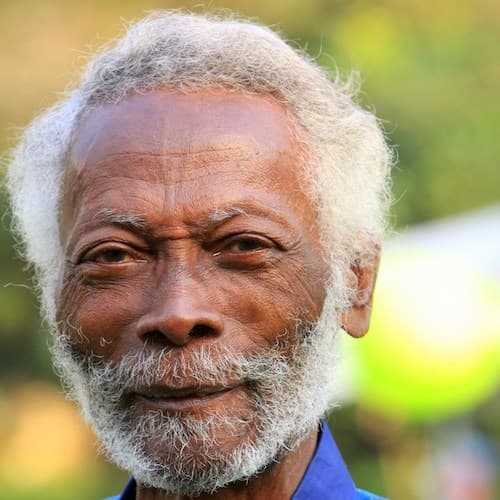
Laing Ebenezer was elected as an AAS Founding Fellow in 1985. As a fellow, Laing Ebenezer contributes to the development of the Academy's strategic direction through participation in AAS activities and governance structures. This gears the Academy's vision of transforming African lives through science.

View Other Fellows
Portrait of Laing Ebenezer

Laing Ebenezer

Founding Fellow

Country

Ghana

Year Elected

1985

Fellow Type

Founding Fellow

Discipline

Biosciences

View Other Fellows
Portrait of Laing Ebenezer

Laing Ebenezer

Founding Fellow

Country

Ghana

Year Elected

1985

Fellow Type

Founding Fellow

Discipline

Biosciences

Biography

Ebenezer Laing, FGA, OV (28 June 1931 – 19 April 2015) was a Ghanaian botanist and geneticist who served as the Pro-Vice Chancellor of the University of Ghana, Legon.He was a professor at the University of Ghana, Legon, and later an emeritus professor. Laing, together with his university classmate and faculty colleague, George C. Clerk (1931–2019), was one of the first Ghanaian academics to specialise in botany as a scientific discipline and contributed significantly to the growth of the field in Ghana. He was also a Fellow of the Ghana Academy of Arts and Sciences, inducted in 1965. Ebenezer Laing was appointed a lecturer at the University of Ghana’s botany department and rose through the ranks to become a full professor. He later became the chairman of the botany department. His research was in plant genetics.[6] He also served as the Hall Master of Legon Hall, of which he was an alumnus. Other senior administrative positions he held include the Dean of the Faculty of Science and the Pro-Vice Chancellor of the university. He was also an external examiner at other universities on the African continent.[1] During his long teaching career, he had courtesy appointments at various departments at the University of Ghana including the Institute of African Studies, the Regional Institute for Population Studies, Department of Geography, Psychology Department, Department of Community Health at UGMS, Korle-Bu, School of Public Health as well as the Legon Centre for International Affairs and Diplomacy (LECIAD). He was also a board member, advisor or consultant to several institutions: the Ghana Atomic Energy Commission, Ghana Academy of Arts and Sciences where he was elected a Fellow in 1965, the Council for Scientific and Industrial Research (CSIR), Cocoa Research Institute, the Volta Basin Research Project and the Population Dynamics Program at the University of Ghana, Legon. He was also a Founding Fellow of the African Academy of Sciences. He also provided advisory services to the development of new higher education initiatives in both the public and private sector in Ghana. These include the University for Development Studies, the Presbyterian University College and the Anglican University College of Technology. He was engaged in international work, among other designations as a member of the joint WHO/FAO/UNEP Panel of Experts on Environmental Management for Vector Control (PEEM) between 1981 and 1995. He co-chaired the ninth PEEM meeting at the World Health Organization in 1989, and was the national counterpart for the organization of the 1992 three-week Health Impact Assessment training course "Health Opportunities in Water Resources Development", held in Akosombo, Ghana.