News
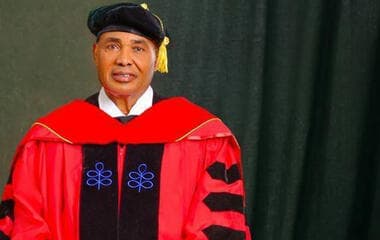
Professor Ebhodaghe Okonofua is the newly elected president of the African Academy of Sciences (AAS) and one of Africa’s foremost obstetrician-gynaecologists.
The Nigerian professor rises to the role after serving as the AAS secretary general. He was chosen after the conclusion of an electronic vote across Africa’s 54 countries in mid-May and replaces outgoing President Lise Korsten, the first woman to lead the organisation. Okonofua will be sworn in on 13 July in Nairobi, Kenya.
He is also an elected member of the United States National Academy of Medicine, serves as Professor Emeritus of Obstetrics and Gynaecology at the University of Benin, holds a PhD in public health from Sweden’s Karolinska Institutet and sits on the editorial review boards of 20 international journals, including the British Journal of Obstetrics and Gynaecology.
Speaking to University World News (UWN), Okonofua outlined his vision to transform the AAS into a stronger, more inclusive, and truly Africa-owned scientific institution. His priorities include repositioning the AAS from a prestigious fellowship body into a strategic partner for African universities.
He also plans to deepen collaboration with the Association of African Universities (AAU) to expand research capacity, mentorship, innovation, and policy engagement across the continent.
UWN: The AAS mandate is to advance science and inform policy. How would you approach this mandate?
EO: These two parts of the AAS mandate are inseparable. Science creates knowledge, but its value is fully realised when it informs decisions that improve lives. My approach to advancing the science mandate of the AAS would be to: strengthen scientific excellence by supporting high-quality context-relevant research, mentorship, and capacity-development across all regions of Africa; bridge the science-policy gap through regular policy briefs, evidence syntheses, and structured engagement with governments, regional economic communities, and the African Union; promote demand-driven research that addresses Africa’s most pressing challenges in health, agriculture, education, energy, climate resilience, and technology; and elevate African voices globally so that Africa is not only a consumer of scientific knowledge, but also a major contributor to shaping global agendas.
Indeed, I believe that, as a result of using this approach during my tenure, AAS would be both Africa’s premier scientific institution and its most trusted source of evidence for policy.
UWN: AAS is often called elite and disconnected from early-career researchers. What would you do during your term to make it more accessible and relevant to them?
EO: This is a legitimate concern which, fortunately, the AAS has been addressing proactively. The AAS currently runs an affiliate programme specifically designed for outstanding early- and mid-career African researchers as a developmental pathway to the academy’s fellowship structure.
Details about the affiliate programme can be obtained from the AAS website, where information such as its strategic objectives, eligibility criteria, and benefits to the affiliates are provided.
Secondly, the African Research Initiative for Scientific Excellence (ARISE) is one of the flagship research-capacity programmes of the AAS [in partnership with the European Union and the Carnegie Corporation of New York]. It was created to strengthen Africa’s scientific leadership by supporting outstanding early- and mid-career African researchers to establish independent research programmes on the continent.
The programme awards highly competitive grants – up to €500,000 [about US$580,800] over five years – to principal investigators based at African universities or research institutions.
Thirdly, as president, I will bring new energy and resources for supporting youth leadership and inclusion into the AAS.
I would focus on three priorities: meaningful participation, which means creating formal mechanisms for early-career researchers to contribute to AAS programmes through inclusion in committees, policy discussions and strategic planning; mentorship and career development, which is about establishing continent-wide mentorship networks linking fellows with emerging scholars and postdoctoral researchers; and targeted opportunities such as expanding access to grants, fellowships, leadership training, science communication programmes, and innovation platforms specifically designed for young scientists.
Indeed, the future of African science depends on today’s early-career researchers. They should not simply be beneficiaries of AAS activities; they should be active partners in shaping the academy’s future.
UWN: Your background is in health sciences. How would you ensure that the AAS gives equal weight to other disciplines?
EO: While my professional roots are in the health sciences, my vision for AAS is firmly multidisciplinary. Indeed, those who know me well know that my approach to health research has always been multi-disciplinary rather than siloed.
Africa’s challenges cannot be solved by one discipline alone. Health outcomes depend on economics, engineering, social sciences, data science, environmental science, governance, and many other fields.
UWN: As a former vice-chancellor, where do you see the biggest disconnect between African universities and the AAS?
EO: The biggest disconnect is that many universities view the AAS primarily as a prestigious fellowship body rather than as a strategic partner in strengthening research ecosystems.
To address this, I would work to increase engagement between the AAS and university leadership, especially through the highly functional AAU, based in Accra, Ghana.
UWN: Africa produces about 2% of global research output, despite having 17% of the world’s population. How can we change this faster and more comprehensively? What would AAS do?
EO: Increasing research output requires more than asking scientists to publish more papers. We must strengthen the entire research ecosystem. AAS can contribute to achieving this through: advocating for increased domestic investment in research and development in African countries; supporting research infrastructure, including laboratories, digital resources and data platforms (the African Lightsource/synchrotron is a good example currently being promoted by the AAS); expanding doctoral and postdoctoral training opportunities; promoting intra-African collaboration to leverage collective strengths; and rewarding quality and impact, not just publication numbers.
UWN: Many African PhDs train abroad and do not return. What concrete role should the AAS play in reversing the brain drain and building postdoctoral pipelines on the continent?
EO: The issue is not simply brain drain. It is the lack of attractive opportunities for highly trained researchers.
AAS can help by: establishing competitive continent-wide postdoctoral fellowship programmes; supporting centres of excellence that provide world-class research environments; creating reintegration grants for African scientists returning from abroad; building networks that connect the African scientific diaspora to institutions on the continent; and working with governments and universities to improve research careers and funding opportunities.
Our goal would be, not only to bring talent back, but also to create conditions under which talented scientists are retained in Africa.
UWN: AAS has been criticised for over-reliance on funding from the Global North. What is your plan to diversify funding and reduce that dependency?
EO: This is an important and, indeed, it was one of the major components of my campaign manifesto. External partnerships remain valuable, but long-term sustainability requires a broader funding base.
The endowment donated to the AAS by [former Nigerian] President Olusegun Obasanjo in 2006 is doing relatively well. However, I promise to help grow the endowment through strategic investment during my tenure and conduct diplomatic activities to ensure that more African countries contribute to the endowment fund.
Additionally, I would pursue greater African governments’ investment in science and research programmes, engage strategically with African philanthropy and high net-worth individuals, and partner with the private sector, particularly in technology, agriculture, health, energy and manufacturing.
More specifically, I will work with the AU and other responsible agencies and thought-leaders in Africa to create an African Science Endowment Fund to provide sustainable long-term support for science on the continent.
UWN: Science collaboration in Africa is fragmented by language, funding and visa barriers. What concrete steps would AAS take to improve cross-border research?
EO: To address this, I would prioritise three actions. These include launching targeted intra-African collaborative grants that require participation from multiple African countries and regions, developing multilingual scientific platforms and networks that facilitate collaboration across anglophone, francophone, lusophone, and arabophone communities, and advocating for a scientific mobility framework through the African Union that simplifies researcher movement, short-term exchanges, and collaborative work across borders.
Under my presidency at the AAS, I will focus on ensuring that African scientists find it easier to collaborate with colleagues in neighbouring countries than with colleagues on other continents.
UWN: You built the Centre of Excellence in Reproductive Health Innovation in Nigeria. What lessons from that model would you use to scale across AAS member countries?
EO: Several lessons stand out. The first is that strong institutional ownership is essential to achieve change, but we have to work hard to sustain such ownership.
The second is that excellence requires sustained investment in people, not just infrastructure. I learned that partnerships are strongest when they are built around local priorities. Mentorship and leadership development multiply impact over time, while research must demonstrate tangible societal value.
The primary lesson from this experience is that, when centres of excellence succeed, they can become platforms for talent development, innovation and regional collaboration rather than being built on isolated projects.
The Centre of Excellence in Reproductive Health Innovation, or CERHI, which I established at the University of Benin was funded by the World Bank, and it brought together scientists in the field of reproductive health from all parts of the continent.
The University of Benin benefited by increasing its intake of international students, which helped to promote its ranking. This model can be scaled across AAS member states for the sole purpose of promoting cross-continental scholarship and sharing of experiences among member countries.
UWN: AAS positions itself as the scientific voice of the African Union. What is one specific policy win you would push for at the AU level in the next three years?
EO: I would advocate for a continental commitment to significantly increase national and regional investment in research and development, accompanied by accountability mechanisms for implementation.
UWN: Critics say African academies spend too much time in global forums and too little on domestic issues. How would you respond?
EO: Global engagement and local impact are not competing priorities; they should reinforce one another. African academies must participate in global discussions because many challenges – from climate change to pandemics to AI [artificial intelligence] governance – are global in nature. However, our credibility ultimately depends on our relevance at home.
My response would be that the AAS must maintain a strong global presence while ensuring that every major international engagement translates into tangible benefits for African countries through policy influence, capacity development, research partnerships, and solutions to local challenges.
Success should not be measured by how many international meetings we attend, but by how effectively science improves lives across the African continent.
Original article written by Clemence Manyukwe and published in University World News.