News
Research developed with young people in Malawi could help bring mental health literacy into university education, following discussions between government representatives, scientists and international partners at Millennium University in Blantyre on 4 September 2026
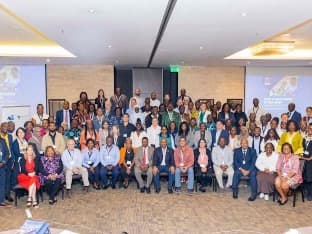
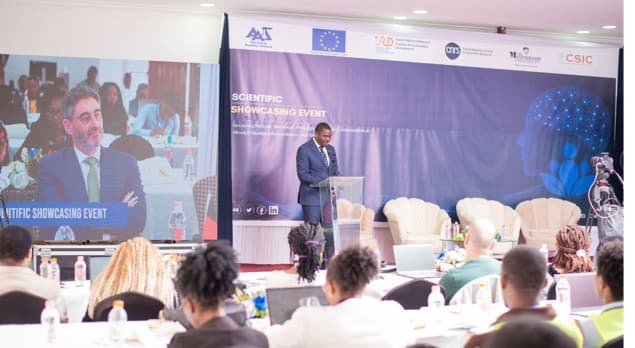
The fourth ARISE Scientific Showcasing Event examined how mental health research can inform education, strengthen services and support national development. It was jointly organised by the African Academy of Sciences (AAS), Millennium University, the European Union, the French National Research Institute for Sustainable Development (IRD), the French National Centre for Scientific Research (CNRS) and the Spanish National Research Council (CSIC).
Held in a hybrid format under the theme Securing Holistic Wellness through Scientific Cooperation in Mental Health Interventions and Research, the event connected African and European expertise around a shared priority: ensuring that research reaches the institutions and communities that can put it into practice.
The event was convened to address the gap between mental health research and the support available to young people, with universities identified as important settings for early intervention, awareness and access to care. It formed part of a wider scientific exchange series under the African Research Initiative for Scientific Excellence (ARISE), implemented by the African Academy of Sciences in partnership with the African Union and funded by the European Union. By connecting African researchers with European research institutions, policymakers and practitioners, the series aims to build lasting collaborations and help translate locally generated evidence into practical interventions and policy.
At the centre of the showcase was the work of Dr Sandra Jumbe[GU1.1], an ARISE Fellow at Millennium University. Her Mental Health Literacy e-Curriculum seeks to improve young people’s understanding of mental health, address stigma and encourage help-seeking in Malawian universities.
Developed through engagement with young Malawians, the intervention responds to local experiences and misconceptions surrounding mental distress. It aims to equip students to recognise distress in themselves and others and understand when and how to seek support.
Opening the event, Deputy Minister Francis Folley, representing the Minister of Education, Science and Technology, linked student mental wellbeing to education outcomes and Malawi’s human capital ambitions. He welcomed the locally developed intervention and expressed government interest in engaging with its evidence, including exploring opportunities to incorporate mental health content into curricula. He also emphasised the need for promising interventions to continue beyond external grant funding through stronger links with national institutions. His remarks opened a discussion on how the education and health sectors, universities and research institutions could work together to sustain effective approaches.
Daniel Aristi-Gaztelumendi, EU Ambassador to Malawi, also travelled to Blantyre for the occasion and stressed the importance of science and research as part of the broader AU-EU partnership. Next to the ARISE programme, Horizon Europe, the EU Flagship Programme for Research and Innovation (2021-2028), has already benefited to 18 Malawi-based teams with further funding opportunities still open for application. The EU Ambassador also highlighted the support provided at national level through the construction/upgrading of schools and science laboratories, the provision of school meals and a new programme to support secondary education with a support of over 60 M€.
Representing the Vice Chancellor of Millennium University, Dr Felix Lombe, Chairman of the University Council, highlighted the importance of accessible support and early recognition of distress among students. He welcomed the curriculum’s grounding in the experiences of young Malawians and its potential relevance across the country’s higher education sector.
Mr Benjamin Cabouat, Deputy Head of Mission, Embassy of France in South-Africa, Lesotho, and Malawi, highlighted the various areas of cooperation between France and Malawi, as well as support for student mobility
The scientific exchanges placed this work within a wider mental and brain health agenda. Contributions examined urbanisation and youth wellbeing, gaps in prevention and advocacy, digital support during pregnancy and after childbirth, neurodevelopmental conditions, sleep, dementia and neuroethics.
Across these discussions, researchers emphasised that interventions must reflect the social environments in which people live and the formal and informal pathways through which they seek help. Young people, communities, practitioners and policymakers need to participate throughout the research process so that resulting approaches are relevant and can be implemented.
Presentations on telemedicine and artificial intelligence explored their potential to extend access to mental health support. Speakers also stressed the importance of clinical validation, privacy, ethical governance and integration into existing services. Locally generated evidence and meaningful community engagement emerged as essential foundations for responsible innovation.
Africa–Europe scientific cooperation was a central thread throughout the event. Dr Laurent Bochereau presented opportunities through Horizon Europe, while Dr Laurent Vidal introduced CNRS and IRD research partnerships and networks. The exchanges highlighted researcher mobility, multidisciplinary collaboration and partnerships that strengthen African institutions’ leadership in defining and addressing research priorities.
Presenting AAS and ARISE, Dr James Mushori described investment in researchers as an investment in teams, institutions and long-term scientific capacity. He emphasised the role of scientific showcasing in connecting research with policymakers, communities and partners who can support its uptake.
The closing discussions linked these practical priorities to Africa’s wider science and innovation agenda. Mr Victor Gondwe of Malawi’s National Commission for Science and Technology examined national implementation of STISA 2034, highlighting universities’ contribution to translating continental ambitions into action.
The Malawi showcase identified a concrete opportunity for follow-up, continued engagement on how evidence from mental health literacy research could inform education policy and institutional practice. Sustaining that dialogue will be essential to turning scientific exchange into support that young people can access and that national systems can sustain.