News
The African Academy of Sciences (AAS) brought scientists and partners together in Nairobi to advance an African-led cancer research agenda, with sustained investment, stronger institutions and the translation of evidence into policy at the center of discussions.
While Africa continues to manage a substantial burden of infectious diseases, longer life expectancy, population growth, urbanization and changing lifestyles are, contributing to a rapid increase in non-communicable diseases. Cancer is emerging as one of it’s defining public health and development challenges, now claiming more lives than malaria, with related deaths expected to double over the next 25 years. Africa needs to recognize this shifting health patterns and address cancer as a critical public health priority.
African-led research is essential to identifying continental priority cancers and risk factors, understanding genetic and environmental determinants, developing affordable diagnostics and treatments, and ensuring that innovations respond to the needs of patients and communities. It must no longer remain primarily a source of data and biological samples. African scientists and institutions must define research questions, lead studies, manage data, shape ethical frameworks, develop technologies and translate evidence into policy and practice.
Africa already possesses considerable scientific talent, expanding research institutions and emerging centres of excellence. However, this talent is constrained by limited financing, fragmented infrastructure, restricted access to technology and insufficient opportunities for sustained career development. African scientists must be supported to strengthen research infrastructure, institutional capacity, sustainable training programmes and multidisciplinary research networks.
It must now move from fragmented, externally dependent cancer-research projects to Africa-owned national and regional research systems that are governed, financed, staffed and measured for long-term public value. This requires a new partnership culture founded on shared governance, fair financing, equitable authorship, ethical stewardship of data and biological samples, investment in African institutions and meaningful opportunities for early- and mid-career researchers.
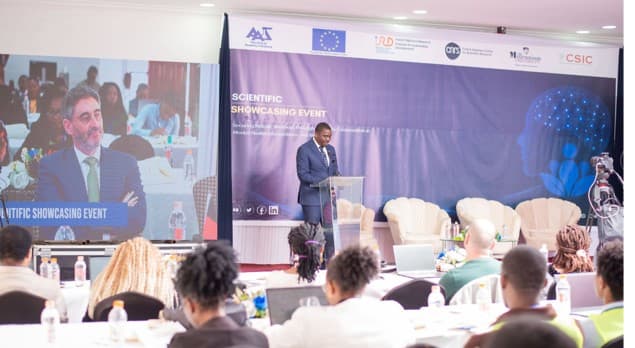
Held on 3–4 September 2026, the Future of Cancer Research in Africa Summit: Innovative Solutions for Sustainable Impact was co-convened by Professors Nkem Khumbah, Director for STI Policy and Partnerships at the AAS and Timothy Rebbeck, Vincent L. Gregory, Jr. Professor of Cancer Prevention, Harvard TH Chan School of Public Health and Dana Farber Cancer Institute of Harvard University. The international summit aimed to accelerate the development of cancer research in Africa. It united leading voices from government, academia, industry, and non-profit organizations across the continent and the United States to assess the current state of oncology on the continent and chart a course for the future. Key areas of focus included cancer biology, epidemiology and prevention, cancer genomics, and the application of technology for early detection.
Professor Khumbah and Satish Gopal, Director of Global Health at the US National Cancer Institute opened the summit. Discussions focused on three connected priorities: research governance and operations, policy and financing, and the development and retention of a cancer research workforce.
“Continental leadership needs to recognize the magnitude of the cancer challenge, and African scientists must be able to shape the questions they investigate; African institutions must have the resources to pursue them. The Academy’s role is to bring scientific expertise into dialogue with those who shape policy and investment, so that evidence informs decisions and research responds to continental priorities” said Professor Khumbah.
Keynote contributions and panels framed the issues, while working groups were tasked with identifying institutional barriers, feasible reforms, potential partners and the resources needed for implementation.
AAS Fellows featured prominently, including Professors Kunle Odunsi of the University of Chicago, Professor Sharon Prince of the University of Cape Town, Professor Sunday Ene-Ojo Atawodi of the Federal University Lokoja, Nigeria, Professor Akindele Olupelumi Adebiyi of Babcock University, Nigeria, and Dr Catherine Kyobutungi of the Africa Population and Health Research Center (APHRC), Nairobi. Their contributions brought the Academy’s scientific network into the discussion on how African institutions can lead and sustain a continental cancer research agenda.
Addressing policy and financing, Dr Kyobutungi highlighted dependence on external funding, uneven research capacity and the need to align investment more closely with African disease burdens and health-system needs. She made the case for sustained support across the research system, encompassing researchers, mentors, research managers, laboratories, registries and data infrastructure.
Her contribution also drew attention to the gap between policy ambition and delivery. Cancer plans need financing, measurable implementation arrangements and accountability. Research must help governments determine which interventions work, where investment is needed and how resources can deliver greater public benefit.
This connection between evidence and implementation is central to AAS’s convening role. Bringing researchers together with policy and funding partners creates opportunities to turn scientific knowledge and institutional experience into proposals that inform national strategies and regional cooperation.
Dr. Wiltshire Christian Nicolai Johnson, Senior Officer at the African Union Development Agency, AUDA-NEPAD noted close alignment between the summit’s objectives and discussions and the Agency’s support for Africa-owned systems aligned with appropriate continental health and research strategies and instruments like STISA 20341, PIFAH2, the Africa Health Atlas.
The discussions also considered how international partnerships can support African leadership. Alongside domestic public investment, the summit examined coordination among funders, institutional cost recovery, private-sector participation and additional financing approaches.
“Sustainable progress depends on strong African institutions leading research that matters to the populations they serve. International partners can support that leadership through long-term collaboration, coordinated investment and support for the people and systems that enable research to inform policy and practice,” said Tim Rebbeck.
To guide follow-up, the summit was designed to inform a shared research agenda, a policy brief, a white paper, working group mandates and a record of partnership commitments. These intended outputs provide a basis for translating the discussions into actionable priorities for governments, research institutions and funders.
The task ahead is to turn those priorities into sustained action. Through its convening platform and scientific networks, AAS can help keep African priorities at the centre of policy and investment decisions, strengthening the institutions and research capabilities needed to improve lives.