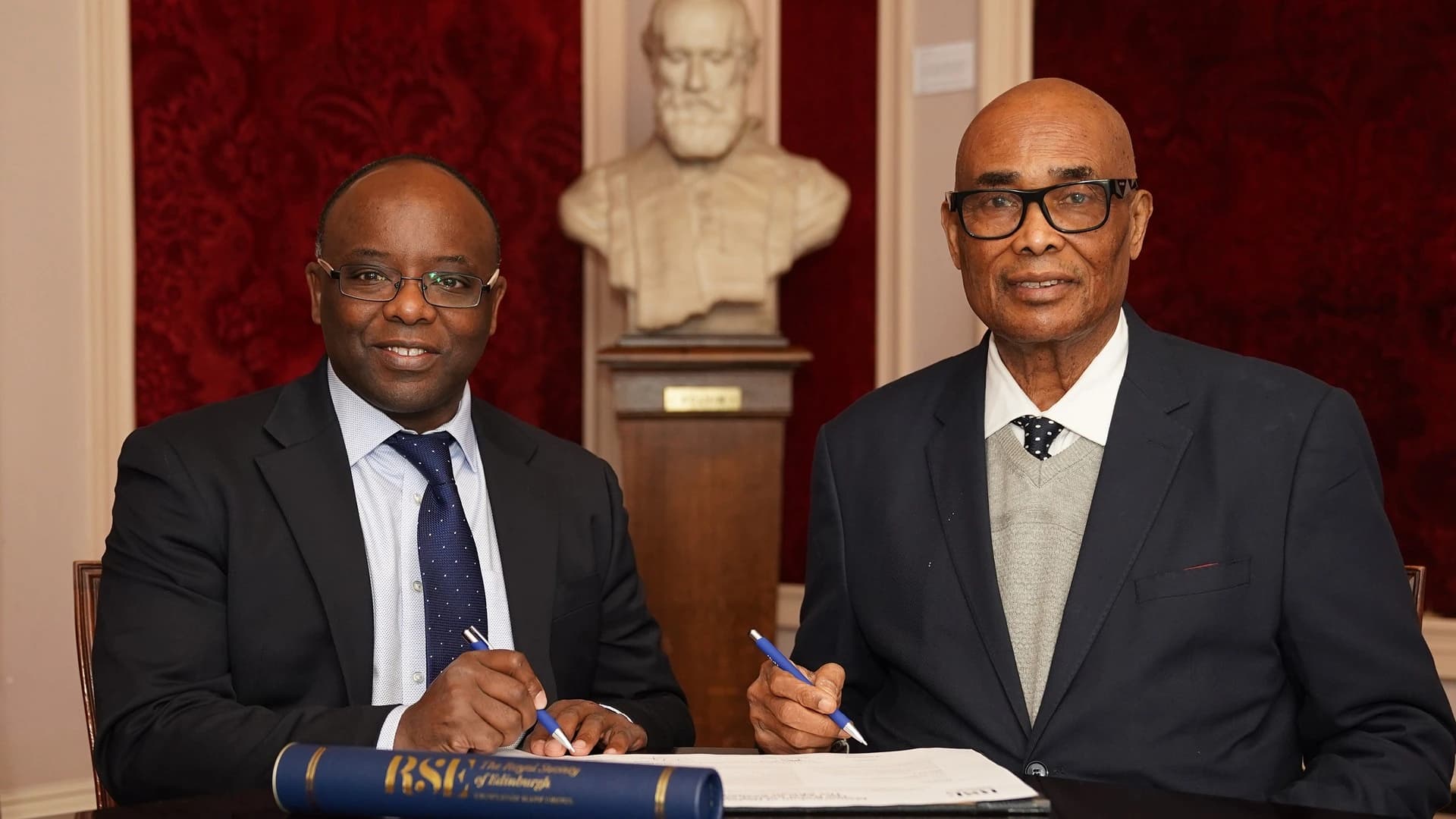
The power of science lies not only in discovery but in collaboration. Recognising this, the African Academy of Sciences (AAS) and the Royal Society of Edinburgh (RSE) have taken an important step towards strengthening scientific cooperation between Africa and Scotland through the signing of a new Memorandum of Understanding (MoU) at the Royal Society of Edinburgh building on 19 October 2026.
The agreement marks a significant milestone in expanding international scientific partnerships that address some of the world's most pressing challenges. It reflects a shared commitment to advancing research, supporting scientific talent, and generating knowledge that contributes to sustainable development across Africa and beyond.
Founded in 1985, the African Academy of Sciences has played a leading role in promoting scientific excellence, providing evidence-based policy advice, and supporting research programmes that tackle Africa’s development priorities. Through this new collaboration, the AAS and RSE will work together to strengthen research networks, foster innovation, and create opportunities for scientists at different stages of their careers.
The African delegation was welcomed by RSE Chief Executive Professor Sarah Skerratt. The agreement was formally signed by Professor Friday Okonofua, President of the AAS, and Professor James Njuguna, RSE Vice President for International Affairs.
Speaking during the signing ceremony, Prof Okonofua highlighted the importance of international partnerships in advancing scientific progress. He noted that science flourishes when researchers work across disciplines and geographical boundaries, sharing ideas and developing common approaches to addressing global challenges.
The MoU will support initiatives focused on early-career researcher development, collaborative research, policy engagement, and resource mobilisation. Particular attention will be given to areas where Scotland and African countries face shared challenges, including health, climate change, food security, technology, and sustainable economic growth.
For the AAS, the agreement aligns with its vision of transforming lives through science by connecting African researchers to global knowledge networks and fostering partnerships that generate impactful solutions. It also reinforces the growing role of science diplomacy in addressing complex societal challenges that transcend national borders.
As Africa and Scotland deepen their scientific ties, this partnership represents more than a formal agreement. It is an investment in people, knowledge, and innovation, creating new opportunities for researchers to work together in pursuit of a healthier, more resilient, and sustainable future.