The African Academy of SciencesTransforming lives through science
GFGPMentorshipARISEFellows Login
The African Academy of Sciences
  • Who we are
    Who we are

    Our story

    Transforming lives through science

    A pan-African academy honouring excellence and shaping research for our continent.

    Discover the AAS

    The AAS

    • About Us
    • Our Partners
    • Contact us
    • Whistleblow

    Governance

    • General Assembly
    • The Governing Council
    • Secretariat
  • Our Fellows
    Our Fellows

    Excellence

    Africa's most distinguished scientists

    Meet our Fellows and Affiliates — leaders advancing science across the continent.

    Browse Fellows
    • AAS Fellows Profiles
    • Fellows Nomination
    • Affiliates
  • Programmes
    Programmes

    Impact

    Programmes shaping Africa's future

    Funding, training and infrastructure for transformative African science.

    All Programmes

    Featured programmes

    The African Postdoctoral Training Initiative (APTI)APTIThe African Postdoctoral Training Initiative (APTI)The African Research Initiative for Scientific Excellence (ARISE)ARISEThe African Research Initiative for Scientific Excellence (ARISE)Supporting and Developing Widening Strategies to Tackle Hydroclimatic Extreme Events (SD-WISHEES)SD-WISHEESSupporting and Developing Widening Strategies to Tackle Hydroclimatic Extreme Events (SD-WISHEES)The African Planet PrizeAPPThe African Planet Prize

    Browse by pillar

    Developing Young Scientist
    • The African Postdoctoral Training Initiative (APTI)
    • Fellows and Affiliates programme
    • The African Research Initiative for Scientific Excellence (ARISE)
    • The AAS Mentorship Scheme
    • AAS Executive Education Program
    Critical Gaps In Science
    • Supporting and Developing Widening Strategies to Tackle Hydroclimatic Extreme Events (SD-WISHEES)
    • The Global Grant Community (GGC)
    • Research Capacity Strengthening Programme in the Social Sciences, Humanities, and Arts. (SSHA)
    • Science4Peace (S4P) Africa Initiative
    • The African Planet Prize
  • News & Events
    News & Events

    Stay informed

    The latest from the AAS community

    News, events, webinars and publications from our scientific community.

    Visit Newsroom

    Media

    • Publications
    • AAS Policies
    • News
    • AAS Newsletters

    Activities

    • Events
    • Activities
    • Webinars
    • Gallery
  • Opportunities
    Opportunities

    Get involved

    Open calls and opportunities

    Vacancies, tenders and funding calls — join us in driving African science.

    View all openings
    • Vacancies
    • Tenders
    • Funding
Donate
logo
African Academy of Sciences

Founded in 1985, the African Academy of Sciences drives science, technology and innovation for Africa's sustainable development.

Call us

+254 709 15 8100

Email us

communication@aasciences.africa

About AAS

Who we areGoverning councilSecretariatWhistleblow

Explore

ProgrammesPublicationsNewsFellows

Opportunities

FundingEventsTendersVacancies
Our Sites
Global Grant CommunityFellows Portal
Follow

8 Miotoni Lane, Karen, Nairobi, Kenya

©1985–2026 The African Academy of Sciences. All Rights Reserved. Privacy & Terms

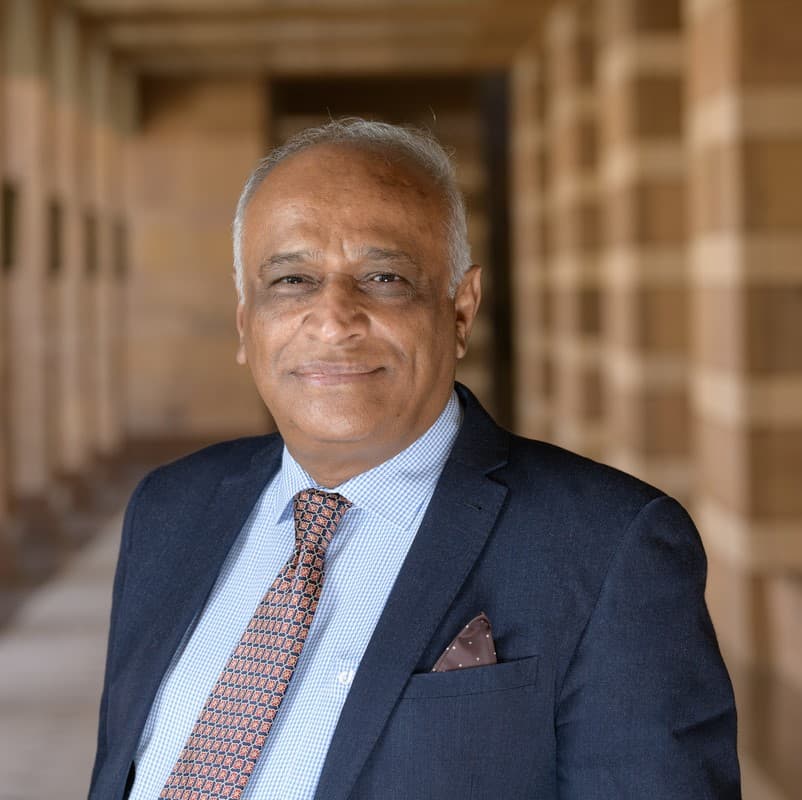
Prof. Maki K. Habib

Prof. Maki K. Habib was elected as an AAS Fellow in 2022. As a fellow, Prof. Maki K. Habib contributes to the development of the Academy's strategic direction through participation in AAS activities and governance structures. This gears the Academy's vision of transforming African lives through science.

View Other Fellows
Portrait of Prof. Maki K. Habib

Prof. Maki K. Habib

Country

Egypt

Year Elected

2022

Discipline

Engineering Technology & Applied Sciences

View Other Fellows
Portrait of Prof. Maki K. Habib

Prof. Maki K. Habib

Country

Egypt

Year Elected

2022

Discipline

Engineering Technology & Applied Sciences

Biography

From his early years at the University of Technology – Baghdad, where he earned his B.Sc. in Control and Systems Engineering and M.Sc. in Computer Engineering, Professor Maki Habib has embarked on a distinguished journey in the fields of Control, Computer Systems, Mechatronics, and Robotics. Achieving his Doctor of Engineering Sciences in Intelligent and Autonomous Robotics from the University of Tsukuba, Japan, Professor Habib has established himself as a leading expert in Robotics and Mechatronics, with a career spanning prestigious institutions and industries globally.
His journey included significant roles as a research scientist at RIKEN, Japan, and a senior researcher at RISO-Laboratories, Japan, before advancing to wider international academic positions. As a visiting researcher at EPFL, Switzerland, and later engagements in Malaysia and Japan, Professor Habib has greatly influenced the fields of Robotics and Mechatronics through academia and industry. His tenure as a Full Professor at Swinburne University and then the American University in Cairo since September 2007, alongside invited professorships at KAIST, South Korea, and Saga University, Japan, highlight his global impact.
Professor Habib's contributions extend beyond teaching, advising industrial giants like Toyota and Denso, and leading innovative projects in Robotics for humanitarian demining and sustainable agriculture. He has significantly contributed to advancing Robotics, IoT, and Cyber-Physical Systems, underscoring his commitment to technological advancement for societal benefit.
Professor Habib's scholarly influence is substantial as an editor and contributor to numerous international journals and conferences. His editorial roles, leadership in conference committees, and numerous invited talks demonstrate his standing in the scientific community. His prolific output includes over 24 books, 38 book chapters, 90 journal papers, and 245 conference papers, covering a wide range of topics from Nanorobotics and Machine Learning to Intelligent Drone Systems and Industry 4.0/5.0 innovations.
Professor Habib's dedication to integrating scientific innovation with technological progress for societal improvement is evident through his diverse research interests and contributions. His global recognition includes being named among the top 2% of impactful scientists annually since 2020 by Stanford-Elsevier, marking him as a distinguished figure in his fields of expertise. Professor Habib’s career is a testament to his enduring commitment to enhancing human life and advancing social development through Robotics and Mechatronics.