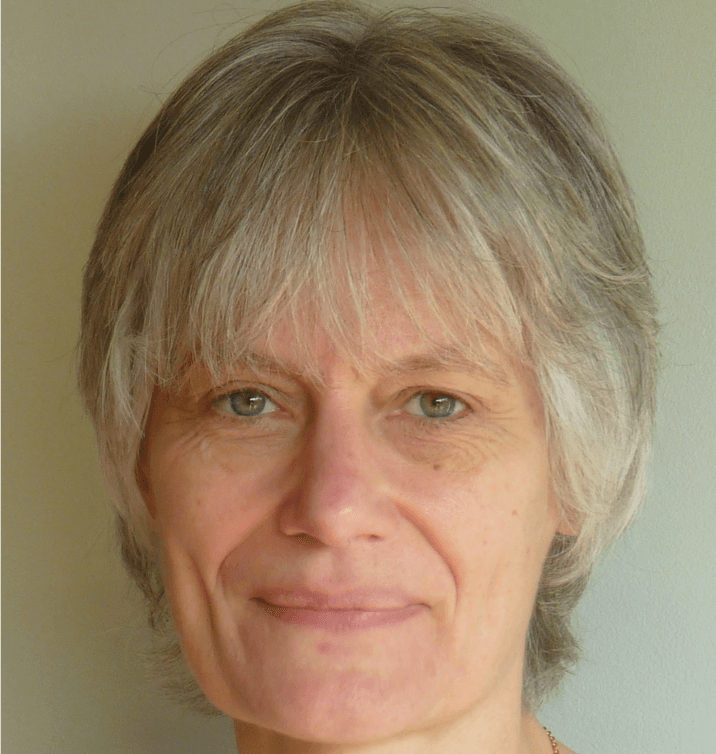
Lydia Roos was elected as an AAS Fellow in 2022. As a fellow, Lydia Roos contributes to the development of the Academy's strategic direction through participation in AAS activities and governance structures. This gears the Academy's vision of transforming African lives through science.
Lydia Roos is a senior scientist at the Laboratory of Nuclear and High-Energy Physics (LPNHE), a joint research unit of the French National Centre for Scientific Research (CNRS) and Sorbonne University in Paris. Throughout her career, she has been working on major particle accelerators in the world, at the European Laboratory for Particle Physics (CERN), Geneva, Switzerland, and at the Stanford Linear Accelerator Center (SLAC), California, USA.
Her expertise ranges from detector construction and operation to statistical data analysis. In 2006, she joined the ATLAS experiment, the largest particle detector ever built, collecting data at the Large Hadron Collider (LHC) at CERN. She worked on the search for the Higgs boson and later on the study of its properties, after its discovery at the LHC in 2012, which earned François Englert and Peter Higgs the Nobel Prize in Physics in 2013. She also contributed to the search for new particles to overcome the limitations of the Standard Model. Recently, she has widened her research activities to muon tomography, a technique derived from particle physics, to study water resources in a volcanic chain in Kenya, in a view of their sustainable use.
Lydia Roos has held several research management positions. In particular, she founded and subsequently led the France-China Particle Physics Laboratory (FCPPL) in 2007-2011. In 2018-2021, she was appointed Scientific Director at the National Institute for Nuclear Physics and Particle Physics (IN2P3) of CNRS. She is also passionate about training students and popularising science. She is co-author of a book called The Adventure of the Large Hadron Collider, and takes part in various science outreach activities in primary and secondary schools, including a project targeting high-school girls.
Lydia Roos is currently a visiting scientist at Kenyatta University and at the French Institute for Research in Africa (IFRA) in Nairobi, Kenya.