The African Academy of SciencesTransforming lives through science
GFGPMentorshipARISEFellows Login
The African Academy of Sciences
  • Who we are
    Who we are

    Our story

    Transforming lives through science

    A pan-African academy honouring excellence and shaping research for our continent.

    Discover the AAS

    The AAS

    • About Us
    • Our Partners
    • Contact us
    • Whistleblow

    Governance

    • General Assembly
    • The Governing Council
    • Secretariat
  • Our Fellows
    Our Fellows

    Excellence

    Africa's most distinguished scientists

    Meet our Fellows and Affiliates — leaders advancing science across the continent.

    Browse Fellows
    • AAS Fellows Profiles
    • Fellows Nomination
    • Affiliates
  • Programmes
    Programmes

    Impact

    Programmes shaping Africa's future

    Funding, training and infrastructure for transformative African science.

    All Programmes

    Featured programmes

    The African Postdoctoral Training Initiative (APTI)APTIThe African Postdoctoral Training Initiative (APTI)The African Research Initiative for Scientific Excellence (ARISE)ARISEThe African Research Initiative for Scientific Excellence (ARISE)Supporting and Developing Widening Strategies to Tackle Hydroclimatic Extreme Events (SD-WISHEES)SD-WISHEESSupporting and Developing Widening Strategies to Tackle Hydroclimatic Extreme Events (SD-WISHEES)The African Planet PrizeAPPThe African Planet Prize

    Browse by pillar

    Developing Young Scientist
    • The African Postdoctoral Training Initiative (APTI)
    • Fellows and Affiliates programme
    • The African Research Initiative for Scientific Excellence (ARISE)
    • The AAS Mentorship Scheme
    • AAS Executive Education Program
    Critical Gaps In Science
    • Supporting and Developing Widening Strategies to Tackle Hydroclimatic Extreme Events (SD-WISHEES)
    • The Global Grant Community (GGC)
    • Research Capacity Strengthening Programme in the Social Sciences, Humanities, and Arts. (SSHA)
    • Science4Peace (S4P) Africa Initiative
    • The African Planet Prize
  • News & Events
    News & Events

    Stay informed

    The latest from the AAS community

    News, events, webinars and publications from our scientific community.

    Visit Newsroom

    Media

    • Publications
    • AAS Policies
    • News
    • AAS Newsletters

    Activities

    • Events
    • Activities
    • Webinars
    • Gallery
  • Opportunities
    Opportunities

    Get involved

    Open calls and opportunities

    Vacancies, tenders and funding calls — join us in driving African science.

    View all openings
    • Vacancies
    • Tenders
    • Funding
Donate
logo
African Academy of Sciences

Founded in 1985, the African Academy of Sciences drives science, technology and innovation for Africa's sustainable development.

Call us

+254 709 15 8100

Email us

communication@aasciences.africa

About AAS

Who we areGoverning councilSecretariatWhistleblow

Explore

ProgrammesPublicationsNewsFellows

Opportunities

FundingEventsTendersVacancies
Our Sites
Global Grant CommunityFellows Portal
Follow

8 Miotoni Lane, Karen, Nairobi, Kenya

©1985–2026 The African Academy of Sciences. All Rights Reserved. Privacy & Terms

Hansson Bill S.

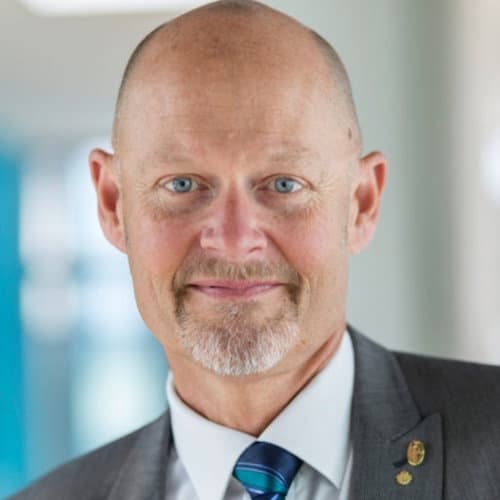
Hansson Bill S. was elected as an AAS Fellow in 2016. As a fellow, Hansson Bill S. contributes to the development of the Academy's strategic direction through participation in AAS activities and governance structures. This gears the Academy's vision of transforming African lives through science.

View Other Fellows
Portrait of Hansson Bill S.

Hansson Bill S.

Country

Sweden

Year Elected

2016

Discipline

Biosciences

View Other Fellows
Portrait of Hansson Bill S.

Hansson Bill S.

Country

Sweden

Year Elected

2016

Discipline

Biosciences

Biography

Prof. Hansson is a Swedish researcher working as Director of the Department of Evolutionary Neuroethology at the Max Planck Institute for Chemical Ecology, Jena, Germany. He was also vice president of the Max Planck Society (MPS) 2014-2020. In his term as vice president, Prof. Hansson was responsible for the 27 Max Planck institutes that focus on biology and medicine in Germany, and in Florida, USA. He also coordinated the international work of the MPS with partner organisations in Shanghai and Buenos Aires, and 19 Max Planck centres all over the world. Hansson studied biology at Lund University where he received a Bachelor of Science degree in Biology in 1982. In 1988 he defended his PhD thesis in Ecology. From 1989-90 he worked as postdoc at the University of Arizona and returned 1990 to a junior professorship in Lund. In 1992 he became Associate Professor and from 2000 until 2001 he was a Professor for Chemical Ecology at Lund University (2000). From 2001 he was Professor and Head of the Chemical Ecology department at the Swedish University of Agricultural Sciences (SLU) in Alnarp, Sweden, until he was appointed Director and MPS Scientific Member at the Max Planck Institute for Chemical Ecology in 2006. He is head of the Department of Evolutionary Neuroethology. In 2010 the Friedrich Schiller University in Jena appointed him Honorary Professor. Hansson's research focuses on neuroethological aspects of insect-insect and insect-plant interactions. He is mainly studying insect olfaction, where his central questions are: How is semiochemical information (odors) detected by the antenna and processed in the insect brain, how did these detection and processing systems evolve, and how does olfaction guide insect behavior. He also compares these systems to other land-living arthropods, as the giant robber crab on Christmas Island. In research, Prof. Hansson continues to work as a neuroethologist in close collaboration with his group leaders in Jena. His work centres on the neural basis of insect behaviour and the interactions between insects and their host plants. He is particularly interested in how scents affect the behaviour of insects and other arthropods, and in the evolution of olfactory function from a behavioural and ecological perspective. Hansson had published more than 300 papers in international, peer-reviewed journals and has an h-factor of 62 (WoS). From 2006-20016, Prof. Hansson was part of the leadership of the Swedish Linnaeus project Insect Chemical Ecology, Ethology and Evolution. From 2020 he is also one of the leaders of the Max Planck Center Next Generation Insect Chemical Ecology (nGICE) in collaboration with SLU and Lund University. During his career, Hansson has also worked at universities and research institutions in Germany, Sweden, Japan, Kenya, the United Kingdom and the United States. Hansson has had a strong connection to the International Centre for Insect Physiology and Ecology, icipe, since the early 1990s, when he worked at the Centre on locust and stem borer chemical communication. He has been a member of the Governing Council of icipe since 2006 and chaired the council 2014-2017 and 2020-. Apart from being a Fellow of the African Academy of Sciences and Honorary Fellow of the Royal Entomological Society. He is also member of the Royal Swedish Academy of Sciences, the Royal Swedish Academy of Agriculture and Forestry, The German National Academy of Sciences Leopoldina, The Finnish Society of Sciences and Letters and of the Saxonian Academy.