GFGP ↗Mentorship ↗ARISE ↗

The African Academy of Sciences

Fellows login
  • Who we are

    Who we are

    Transforming lives through science

    A pan-African academy honouring excellence and shaping research for our continent.

    About the AAS →
    • 01About UsThe AAS→
    • 02Our PartnersThe AAS→
    • 03Contact usThe AAS→
    • 04WhistleblowThe AAS→
    • 05General AssemblyGovernance→
    • 06The Governing CouncilGovernance→
    • 07SecretariatGovernance→

    About Us

    Mission, mandate and history

  • Our Fellows

    Our Fellows

    Africa's most distinguished scientists

    Meet our Fellows and Affiliates — leaders advancing science across the continent.

    Browse Fellows →
    • 01AAS Fellows ProfilesFellowship→
    • 02Fellows NominationFellowship→
    • 03AffiliatesNetwork→

    AAS Fellows Profiles

    Search the Fellowship

  • Programmes

    Programmes

    Programmes shaping Africa's future

    Funding, training and infrastructure for transformative African science.

    All Programmes →

    Featured programmes

    APTIThe African Postdoctoral Training Initiative (APTI)ARISEThe African Research Initiative for Scientific Excellence (ARISE)SD-WISHEESSupporting and Developing Widening Strategies to Tackle Hydroclimatic Extreme Events (SD-WISHEES)APPThe African Planet Prize

    Browse by pillar

    Developing Young Scientist

    • The African Postdoctoral Training Initiative (APTI)APTI
    • Fellows and Affiliates programmeAffiliates
    • The African Research Initiative for Scientific Excellence (ARISE)ARISE
    • The AAS Mentorship SchemeMentorship-Scheme
    • AAS Executive Education ProgramExecutive-Education

    Critical Gaps In Science

    • Supporting and Developing Widening Strategies to Tackle Hydroclimatic Extreme Events (SD-WISHEES)SD-WISHEES
    • The Global Grant Community (GGC)GGC
    • Research Capacity Strengthening Programme in the Social Sciences, Humanities, and Arts. (SSHA)SSHA
    • Science4Peace (S4P) Africa InitiativeS4P
    • The African Planet PrizeAPP
The African Academy of Sciences
  • News & Events

    News & Events

    The latest from the AAS community

    News, events, webinars and publications from our scientific community.

    Visit Newsroom →
    • 01NewsMedia→
    • 02PublicationsMedia→
    • 03AAS PoliciesMedia→
    • 04AAS NewslettersMedia→
    • 05EventsActivities→
    • 06ActivitiesActivities→
    • 07WebinarsActivities→
    • 08GalleryActivities→

    News

    Announcements and stories

  • Opportunities

    Opportunities

    Open calls and opportunities

    Vacancies, tenders and funding calls — join us in driving African science.

    View all openings →
    • 01VacanciesOpen calls→
    • 02TendersOpen calls→
    • 03FundingOpen calls→

    Vacancies

    Careers at the AAS

  • Donate
logo
African Academy of Sciences

Founded in 1985, the African Academy of Sciences drives science, technology and innovation for Africa's sustainable development.

Call us

+254 709 15 8100

Email us

communication@aasciences.africa

About AAS

Who we areGoverning councilSecretariatWhistleblow

Explore

ProgrammesPublicationsNewsFellows

Opportunities

FundingEventsTendersVacancies
Our Sites
Global Grant CommunityFellows Portal
Follow

8 Miotoni Lane, Karen, Nairobi, Kenya

©1985–2026 The African Academy of Sciences. All Rights Reserved. Privacy & Terms

Crewe Robin

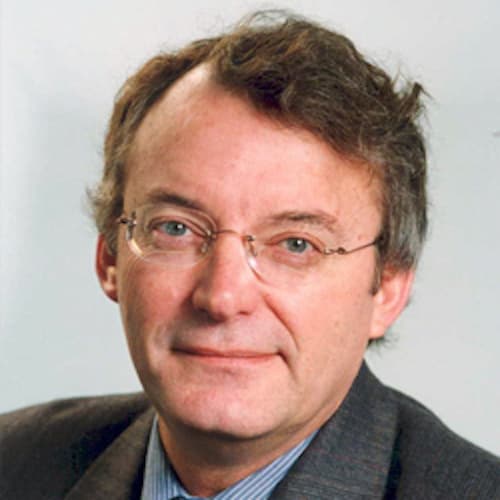
Crewe Robin was elected as an AAS Fellow in 2012. As a fellow, Crewe Robin contributes to the development of the Academy's strategic direction through participation in AAS activities and governance structures. This gears the Academy's vision of transforming African lives through science.

View Other Fellows
Portrait of Crewe Robin

Crewe Robin

Fellow

Country

South Africa

Year Elected

2012

Fellow Type

Fellow

Discipline

Biosciences

View Other Fellows
Portrait of Crewe Robin

Crewe Robin

Fellow

Country

South Africa

Year Elected

2012

Fellow Type

Fellow

Discipline

Biosciences

Biography

Prof. Robin Crewe obtained his Bachelors and Masters Degrees at the University of Natal and doctoral degree from the University of Georgia in the USA for a study of ant alarm pheromones. He returned to the University of Natal as a lecturer of Entomology. He later moved to the University of the Witwatersrand where he established the Communication Biology Research Group (CBRG) and was its Director for a decade. He was also appointed, successively, as head of the department of Zoology, deputy-dean of the Faculty of Science and then Dean of the Faculty of Science. He then moved to the University of Pretoria as the Dean of the Faculty of Biological and Agricultural Sciences and established the Social Insects Research Group (SIRG) within the Department of  Zoology and Entomology. He also served as Dean of the Faculty of Natural and Agricultural Sciences and is now the Acting Senior Vice-principal of the University and interim chair of the National Research Foundation of South Africa. Prof. Crewe’s research activities fall into two major areas (1) The exploration of the diversity of ponerine ant social organization, which has resulted in the publication of a number of the studies on P. berthoudi and Steblognathus. Both studies provided significant insights into both facultative polygyny (P. berthoudi) and showed that establishing dominance hierarchies has significant endocrinological effects that are associated with ovary activation.  (2) The complexity of the relationships between queens, between queens and workers, and amongst workers in honeybees. In queen-less colonies, workers have been shown to undertake pheromonal contests that result in the establishment of dominant individuals with activated ovaries who monopolize reproduction. This results in forms of social organisation and social parasitism that were not previously thought to exist within honeybee colonies. The conventional wisdom was that queens regulated worker reproduction and that at best workers could reproduce in queen-less colonies. These findings have significant implications for commercial apiculture and the maintenance of honeybee biodiversity.