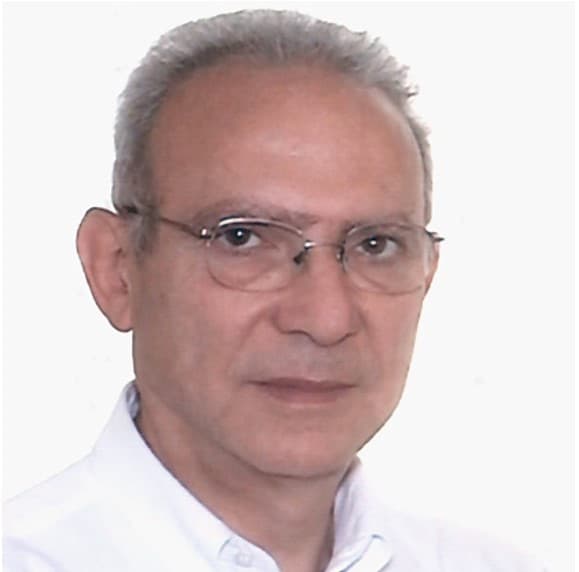
Prof. Alain Krief was elected as an AAS Fellow in 2021. As a fellow, Prof. Alain Krief contributes to the development of the Academy's strategic direction through participation in AAS activities and governance structures. This gears the Academy's vision of transforming African lives through science.
Prof. Alain Krief was born in Tunisia in 1942 and possesses both Tunisian and French nationalities. He is living in Belgium since 1972 and is presently Emeritus Professor (Unamur, 2008). Alain Krief received his Ph.D. (1970) from the University of Paris under the supervision of the late Prof. J. Ficini and realized his post-doctorate at Harvard University (1970-1971) under the supervision of Prof. E. J. Corey (Nobel Prize in Chemistry in 1990). He joined the University of Namur where he created the Department of Organic Chemistry (1972). He is also an Adjunct Professor, at HEJ Research Institute, University of Karachi, Pakistan, and Senior Associate to the UNESCO UNISA Africa Chair in Nanosciences & Nanotechnology (University of South Africa, Cape Town). He has been the Executive Director of the International Organization for Chemical Sciences in Development (IOCD, 2009-2020), the President of the Royal Chemical Society of Belgium (1993-1995), the President of the Janssen Prize for Creativity in Organic Synthesis (2002- 2008, Johnson & Johnson Company) and the President of the 40th Bürgenstock Conference (Switzerland, 2005).
Prof. Krief received a large number of honors and awards such as the Prize of the French Academy of Sciences for his outstanding research work on steroid biosynthesis (1985, France), the International Prize Wernaers for knowledge broadcasting (1999, Belgium), Japan Society for the Promotion of Science (1996, Japan). He was Visiting Professor at Université Libre de Bruxelles (Belgium), University of Reims and University of Strasbourg (France), University of Bochum, University of Giessen, University of Hamburg, University of Honeheim, University of Stuttgart (Germany); Technion, Haifa, (Israel), Japan Society for the Promotion of Science (Japan), University of Karachi (Pakistan) and French-speaking Swiss Universities (Switzerland).
Prof. Krief made outstanding contributions to organic chemistry, in particular to selenium organic chemistry. His research activities cover: